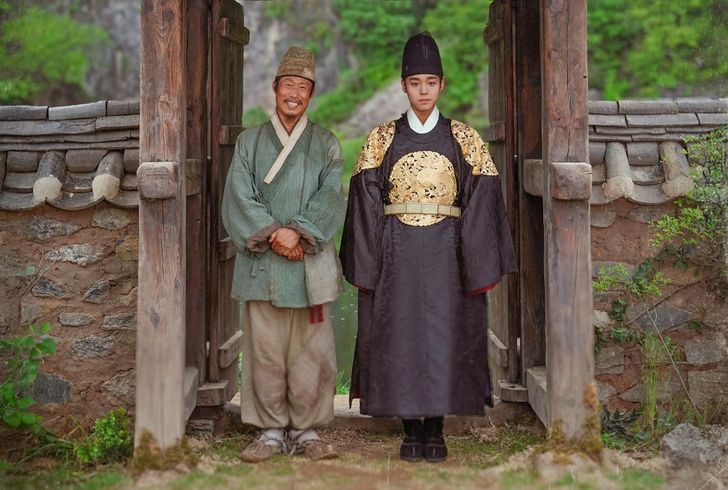
The King’s Warden didn’t create Korea’s renewed appetite for historical and political storytelling on its own—but its box-office success has made the trend impossible for the industry to ignore.
In South Korea’s film industry, trends do not become real only when critics notice them. They become real when the box office forces the market to pay attention. That is why the recent success of The King’s Warden matters so much.
The film’s strong performance has done more than crown a single winner. It has sharpened a larger industry conversation about the renewed audience appeal of historical and political storytelling. For months, there had been signs that viewers were responding to stories rooted in national memory, power struggles, and ideological tension. But once The King’s Warden became a major hit, that interest no longer looked like a niche preference or a prestige exception. It looked like momentum.
The Breakout Hit That Turned a Mood Into a Market Signal
What makes The King’s Warden so important is not simply that it succeeded. It is that it succeeded in a way that reframed assumptions about what audiences want from Korean cinema right now.
Historical films have often been treated as culturally respected but commercially uncertain. Political dramas, meanwhile, are often seen as relevant but potentially too heavy for broad theatrical appeal. The King’s Warden disrupted both assumptions at once. By proving that a period film with strong political undertones could command mass attention, it gave the industry a measurable signal that audiences are willing—perhaps eager—to engage with more than escapist entertainment.
That kind of success changes how a market thinks. It affects what distributors promote, what producers develop, and what kinds of stories seem newly viable in the months ahead.
Why This Film Hit So Hard Now
The success of The King’s Warden also points to something deeper than simple genre revival. Audiences are not responding to historical material only because it is historical. They are responding because stories about power, loyalty, authority, and national destiny feel newly charged in the present.
This is where Korean historical and political cinema has long been uniquely powerful. It does not present the past as a static backdrop. It uses the past to intensify present-day questions. Court intrigue becomes a reflection on political power. Institutional conflict becomes a story about public trust. Historical struggle becomes a way of discussing modern unease without naming it directly.
That dynamic helps explain why a film like The King’s Warden can feel both traditional and timely. It delivers period drama on the surface, but beneath that it offers something much more current: a language for thinking about power and its consequences.
More Than One Film, But One Film That Made the Trend Visible
It would be too simple to say that The King’s Warden alone created this renewed interest in historical and political themes. Audience appetite does not emerge from nowhere, and Korean cinema has never fully abandoned these subjects. The deeper cultural drivers were already in place: rising interest in national identity, continued public engagement with social debate, and a film culture that has always excelled at turning institutional conflict into intimate human drama.
But breakout hits matter because they clarify what had only been sensed. They take a mood and make it legible. In that sense, The King’s Warden may be less the sole cause of the trend than the film that confirmed it.
That distinction matters. A hit movie can be an outlier. A hit movie that taps into a larger audience mood can become a turning point.
Korean Cinema’s Familiar Strength, Newly Reawakened
There is also a reason this trend feels so natural within the Korean film landscape. Korean cinema has long been strongest when it connects private emotion to public systems. A family drama becomes a story about ideology. A court thriller becomes a meditation on state power. A historical narrative becomes a question about who controls memory.
That ability to make the political personal is one of the industry’s defining creative advantages. It allows difficult themes to travel beyond the art-house audience and into the mainstream without losing their weight. Viewers do not need to arrive seeking a lecture on history or governance. They arrive for character, suspense, moral conflict, and emotional consequence—and leave having engaged with much larger questions.
That is exactly the kind of lane The King’s Warden has helped reopen.
What the Industry Is Likely Seeing Now
For industry players, the lesson is straightforward. There is commercial life in stories once considered too dense, too serious, or too historically specific to break wide. That does not mean every historical drama will become a phenomenon, or that audiences are abandoning lighter genres. Korean cinema remains too varied for that.
But it does mean the market has received a reminder: serious themes are not a liability when they are paired with urgency, emotional clarity, and strong execution. The King’s Warden has shown that history and politics can still fill theaters when they are presented not as homework, but as drama with real stakes.
The Past, Once Again, Feels Urgent
In the end, the renewed attention to historical and political films says something larger about this cultural moment. Audiences appear increasingly drawn to stories that do not merely distract, but interpret. They want films that help them feel the pressure beneath public life, not just escape it.
That is why The King’s Warden matters beyond its own success. It has become the clearest sign that Korean cinema’s turn toward history and power is not a side current. It is one of the most revealing developments in the market right now.
And for an industry always searching for the next signal, this one is difficult to miss.

Leave a Reply