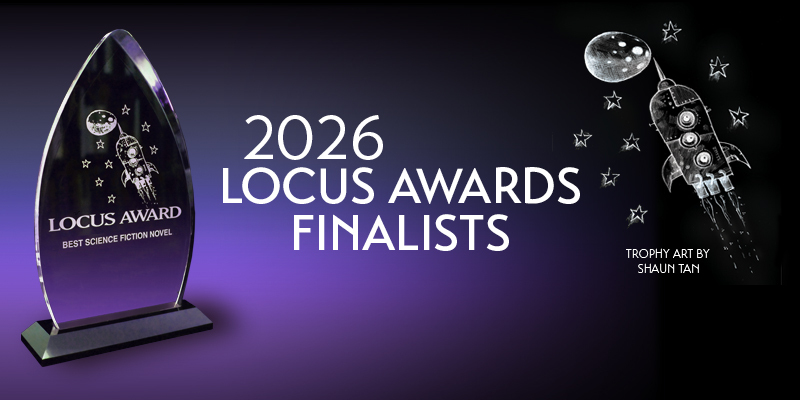
Korean speculative fiction has a strong new international awards hook. Four Korean books by three authors have been shortlisted in the newly introduced translated novel category at the 2026 Locus Awards, giving Korean writers four of the ten finalist spots in the category’s first year. Bora Chung leads the group with two shortlisted titles, Red Sword and The Midnight Timetable. The other Korean finalists are Cheon Seon-ran’s The Midnight Shift and Kim Sung-il’s Blood for the Undying Throne.
That concentration makes the shortlist notable beyond a single nomination story. Rather than one breakout title carrying the moment, Korean speculative fiction appears here as a broader field, spanning horror, ghost fiction, mystery-inflected speculative writing, and epic fantasy. The result is a cleaner signal of depth in translation: multiple books, multiple authors, and multiple subgenres arriving on one of speculative fiction’s most visible annual awards lists at the same time.
Bora Chung is the clearest center of gravity on the list. Both Red Sword and The Midnight Timetable were translated into English by Anton Hur, who also translated Kim Sung-il’s Blood for the Undying Throne. Cheon Seon-ran’s The Midnight Shift was translated by Gene Png. The shortlist therefore highlights not only Korean authors but also the translators helping define how Korean speculative fiction is being read abroad.
The shape of the four books also helps explain why the shortlist stands out. The Midnight Timetable has been presented in English as a ghost-linked novel set around a mysterious institute housing cursed objects, while coverage of the shortlist describes the Korean finalists as spanning dark fantasy, speculative horror, and science fiction. That breadth matters because it makes the Korean presence on the list feel less like a temporary trend and more like an expanding category of translated reading now reaching wider genre audiences.
There is also continuity behind the moment. Bora Chung’s Cursed Bunny was shortlisted for the 2022 International Booker Prize and was later named a finalist for the National Book Award for Translated Literature, establishing her as one of the most internationally visible Korean speculative writers in English. The new Locus shortlist extends that momentum from a single acclaimed collection into a broader run of translated work.
The larger takeaway is simple: Korean speculative fiction is no longer showing up internationally only as an occasional crossover success. On the 2026 Locus Awards shortlist, it appears as a cluster, and that makes this one of the clearest recent signs that Korean genre fiction in translation is becoming easier for global readers to find, follow, and discuss.



Leave a Reply