
Later this month, BLACKPINK will collaborate with the National Museum of Korea in a timed activation running Feb 27–Mar 8, 2026 (some coverage cites Feb 26–Mar 8 depending on how the launch window is described).
On paper, it looks like another high-profile crossover. In practice, it’s a clear signal that Korea’s top cultural institutions are formalizing a playbook: use K-pop fandom infrastructure to modernize museum distribution—audiences, tourism, and revenue—without rewriting the mission.
This is not “museums chasing pop culture.” It’s museums competing in a new attention market.

The peg: a museum activation timed like a comeback
The National Museum of Korea collaboration is tied to BLACKPINK’s release cycle (coverage links it to the group’s upcoming EP). The key detail for museums isn’t the record—it’s the timed window.
Timed windows are how K-pop already operates: drops, limited editions, and moments engineered for participation. Museums have learned that this structure converts awareness into measurable behavior: visits, memberships, shop conversions, and global press.
Why museums are doing this now
Museum x K-pop collaborations have evolved from “fun partnership” to institutional strategy, because they address three persistent constraints:
1) Audience growth, especially Gen Z and global visitors
Museums can build education programs for years and still struggle to reach younger audiences at scale. K-pop offers a ready-made acquisition channel—fandom communities that already mobilize for offline participation and social proof.
2) Tourism and city branding
K-pop doesn’t just sell music; it sells itineraries. A museum activation becomes a destination anchor for fans visiting Seoul, especially when aligned to releases, tour movement, or adjacent pop-ups.
3) Monetization that doesn’t feel like “raising ticket prices”
Museums are under pressure to diversify income. Collaborations unlock retail, licensing, and premium experiences (limited merchandise, member previews, curated content) while keeping baseline admission messaging intact.
The institutional version of a “collab” looks different
For museums, the collaboration can’t be purely visual or promotional. The deals that endure tend to create a translation layer between pop culture attention and museum purpose—heritage, craft, interpretation, public access.
That framing has become increasingly explicit in Korea. A separate, more structural example is HYBE’s partnership (MOU) with the National Museum of Korea and its foundation, aimed at developing cultural products and expanding global reach—less a one-off event, more a repeatable pipeline.
Together, these two signals—one timed activation, one institutional MOU—suggest a trajectory: museums are building K-pop into their long-term distribution strategy, not just borrowing celebrity once.
What a museum actually “buys” from K-pop
The value isn’t celebrity. It’s distribution mechanics:
- Attention distribution: artists’ owned channels + global earned media
- Foot-traffic distribution: pilgrimage behavior + scarcity windows
- Commerce distribution: collector psychology (limited runs, variants, drops)
- Cultural distribution: reframing heritage as participatory and shareable
Museums that treat this like a typical sponsor campaign risk backlash (“eventification”) and operational strain. Museums that treat it like an exhibition—with crowd design, interpretation, and post-visit conversion—capture durable gains.
The operational reality: fandom-scale visitors change museum math
A fandom-driven activation can overload systems that work fine for normal weekends:
- Timed entry becomes mandatory, not optional.
- Queue management turns into a core part of visitor experience.
- Retail operations need drop-like policies (purchase limits, stock staging).
- Staff training shifts toward crowd flow and de-escalation.
If the museum gets those mechanics right, it can convert a short activation into long-term benefits: membership growth, repeat visits, and international brand lift.
What to watch during Feb 27–Mar 8
If you’re tracking this as a trend—not just a one-off—watch for these signals during the activation window:
- Interpretation depth: Is there a real collection tie-in, or just co-branding?
- Membership strategy: Are there member-only previews or conversion pushes?
- Retail approach: Is merchandise positioned as museum retail (heritage-led) or typical pop-up merch?
- International accessibility: Bilingual content, wayfinding, “first museum visit” guides
- Institutional tone: Does the museum frame this as access/education/cultural exchange?
These details will tell you whether Korea’s biggest museums are simply hosting moments—or building an export-grade cultural platform.
The bigger picture
K-pop’s global dominance has created something rare: a cultural sector with the marketing power of a tech platform. Korean museums are increasingly treating that as infrastructure—one that can carry heritage, design, and national branding across borders.
The BLACKPINK x National Museum of Korea activation is the next test case. Not “can a museum do a pop collaboration,” but can an institution convert fandom energy into sustainable public value—without sacrificing legitimacy.
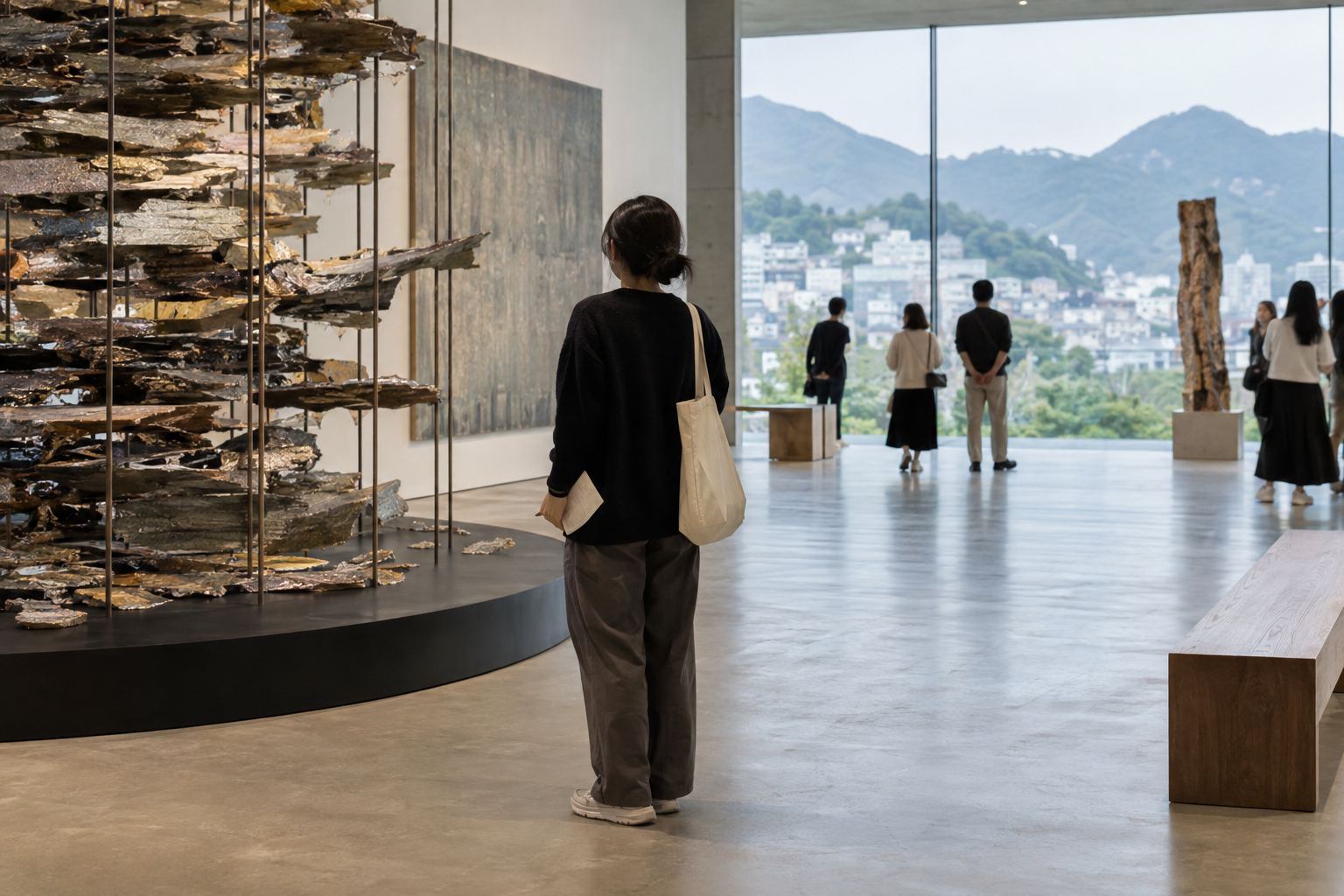
Photo: National Museum of Korea


Leave a Reply