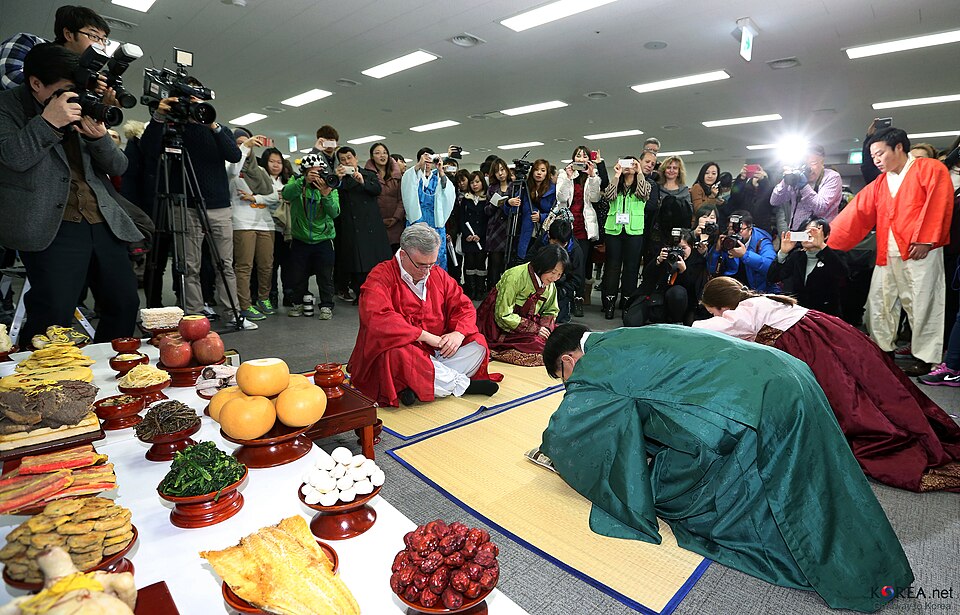
As Seollal (Korean Lunar New Year) approaches, Korean social feeds reliably fill with one kind of content: Seollal food—holiday foods and celebratory meals. What’s interesting isn’t just that people are cooking and eating traditional dishes. It’s that the language around them—“holiday table,” “Seollal meal,” “what we’re serving,” “simple rite, meaningful meal”—is being shared at unusually high volume, signaling a broader shift: Seollal food is increasingly treated as lifestyle culture rather than obligation.
From “must-do” to “how we celebrate”
Traditionally, Seollal foods were closely tied to family rituals and formal tables. Today, many households still honor those symbols, but the framing has softened. More people are asking:
- “What’s the minimum that still feels like Seollal?”
- “How do we keep the meaning without exhausting ourselves?”
- “What’s our family’s version of the holiday table?”
That flexibility makes Seollal food highly shareable—because it’s no longer one standard to meet, but many valid interpretations to show.
The three forces driving the trend: simplify, outsource, remix
Most viral Seollal food posts fit into one of three modern patterns:
1) Simplify:
The “lighter holiday table” has become a mainstream idea—fewer items, cleaner preparation, less pressure. People share “5-dish tables” or “one main + a few sides” as a way to normalize comfort over perfection.
2) Outsource:
Convenience is no longer seen as “less authentic.” Ready-to-cook sets, pre-prepped ingredients, and partial outsourcing (buying one difficult dish while cooking the rest) are increasingly normalized, especially for small households and busy families.
3) Remix:
Seollal staples are being reinterpreted to match modern tastes—lighter, healthier, or simply more personal. The result: tradition stays recognizable, but the flavor language gets updated.
The dishes that anchor Seollal—and why they dominate feeds
A few foods consistently anchor Seollal content because they’re symbolic and visually recognizable:
- Tteokguk (rice-cake soup): The signature “New Year bowl”—simple ingredients, strong meaning.
- Japchae (glass noodles): Feels festive, reheats well, and scales easily for gatherings.
- Jeon / Buchimgae (savory pancakes): The most labor-intensive—so it’s also the #1 category for shortcuts, batch cooking, and “how to reduce the frying” tips.
- Galbijjim (braised short ribs) / Sanjeok (skewers): High-effort, high-status dishes—often purchased or made as the “one main dish” centerpiece.
Because these foods are both iconic and customizable, they’re ideal for short-form sharing: before/after shots, “my family’s table,” and quick tips.
“Healthy Seollal” is now part of the conversation
Another reason “Seollal food” is trending: people increasingly talk about Seollal meals through wellness and balance. Posts about reducing oil, lowering sodium, adding protein, or switching ingredients aren’t seen as breaking tradition—they’re seen as modernizing it.
That’s why you’ll see content like:
- lighter jeon options (tofu, mushrooms, zucchini),
- smaller portions with better plating,
- “one indulgent dish, everything else balanced.”
Leftovers turned into content
Seollal leftovers are a trend engine on their own. Instead of being a burden, they become the material for “second-life recipes” that people love to share:
- jeon → jeon stew, rice bowls, sandwiches
- japchae → lunchbox portions, salad toppings
- tteok (rice cakes) → tteokbokki, pan-fried snacks
- namul (seasoned vegetables) → bibimbap-style bowls
This extends the holiday moment—and keeps “Seollal food” trending even after the main day.
The underlying reason: pressure is down, identity is up
Rising costs and holiday fatigue are real, but the bigger story is cultural: people want Seollal to feel meaningful without feeling punishing. And because food is the most visible, emotional, and universal part of the holiday, it becomes the best place to express that shift.
So “Seollal food” isn’t just about dishes. It’s about how people define celebration now:
- less performance,
- more comfort,
- and a stronger sense of “this is what Seollal looks like in our life.”
In short: Seollal food is trending because it’s no longer only tradition to follow—it’s a culture people actively redesign, photograph, and share.
Korea.net / Korean Culture and Information Service


Leave a Reply