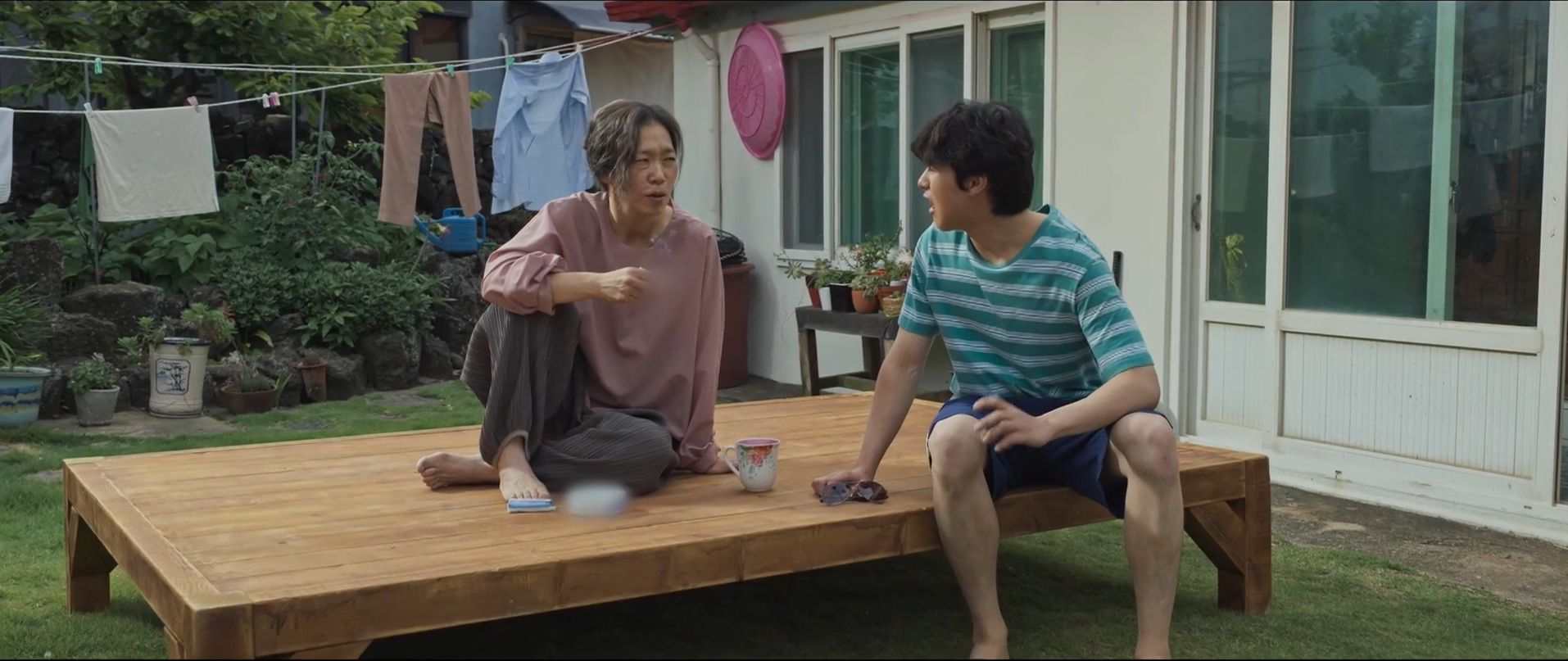
Chung Ji-young’s My Name (내 이름은) is one of the most notable Korean historical dramas to reach theaters this spring. Released in South Korea on April 15, 2026, the film is directed by Chung Ji-young and stars Yeom Hye-ran and Shin Woo-bin. It was also selected for the 2026 Berlinale Forum, and later appeared in the lineup for the Far East Film Festival in Udine, giving it both domestic weight and international visibility.
What makes My Name especially significant is its subject. The film is built around Jeju 4.3, one of the most painful and historically suppressed episodes in modern Korean history. Rather than presenting the event as a distant tragedy sealed in the past, My Name approaches it through memory, family, and the ways trauma survives across generations. That choice gives the film a different emotional register from more conventional historical dramas. It is less interested in spectacle than in inheritance.
A brief history of Jeju 4.3
For readers unfamiliar with the history, Jeju 4.3 refers to the violence, armed conflict, and state suppression that unfolded on Jeju Island from March 1, 1947 through September 21, 1954. Official Jeju 4.3 materials define it as an incident that caused large-scale civilian sacrifice during clashes and suppression operations in the early Cold War period after liberation from Japanese colonial rule. Official and commemorative sources commonly cite around 30,000 victims, roughly one tenth of Jeju’s population at the time.
The event remained silenced for decades. UNESCO’s 2025 Memory of the World inscription for the Jeju 4.3 archives describes the records as preserving memories that had long been suppressed, while also documenting later efforts to restore victims’ honor and pursue reconciliation. That long delay in public recognition is central to why Jeju 4.3 still carries such emotional and political force in South Korea today. It is not just a matter of past violence, but of how long that violence was denied, stigmatized, or pushed out of public speech.
What the film is about
My Name is set partly in 1998, a period when Jeju 4.3 was beginning to be discussed more openly in South Korea. Its story centers on Young-oak, a teenage boy tormented over his feminine-connotated name, and his mother Jeong-sun, whose buried childhood trauma resurfaces in episodes that she can no longer contain. As tensions build around bullying, shame, and violence in the boy’s school life, the film gradually links those present-day pressures to Jeong-sun’s repressed memories of Jeju 4.3.
That structure is one of the film’s strongest ideas. Instead of reconstructing Jeju 4.3 only as a historical event, Chung uses the relationship between mother and son to show how unprocessed collective violence leaks into ordinary life. In his Berlinale interview, he said he wanted to focus on the “collective violence” of April 3 and the trauma it left behind, while connecting the older generation’s experience of political terror to the younger generation’s experience of school violence. The film’s 1998 setting is not incidental; Chung explicitly links that year to the moment when the incident began to be newly illuminated in public.
The title also carries unusual weight. My Name is not simply about identity in the abstract. It turns naming into a question of humiliation, memory, and recovery. Young-oak wants distance from a name that makes him a target, while the film’s official synopsis describes “lost names” from the Jeju massacre resurfacing through Jeong-sun’s return to the past. In other words, the film treats the name not only as a personal marker but as a site where history, shame, and recognition collide.
This is also why the film feels well suited to KLitReads readers. The strongest Korean novels about historical violence often avoid reducing catastrophe to explanation alone. They work through afterlives: family fractures, silences, ghosts, and the unstable border between private memory and public history. My Name appears to operate in a similar register. Even in festival materials, it is framed not as a straightforward chronicle but as an identity drama in which the repressed keeps resurfacing. That gives the film a literary texture, even when its subject is overtly political.
There is also a broader cultural reason the film matters now. Jeju 4.3 has become more internationally legible in recent years, especially after the UNESCO inscription of the archives in 2025. At the same time, it remains unevenly understood outside Korea and, as Chung noted in interview, still not fully understood inside Korea either. My Name arrives in that gap: after official recognition has grown, but while the work of cultural memory is still incomplete.
In that sense, My Name is not simply a film about a massacre. It is a film about what happens after history becomes unspeakable, and about what it takes for speech to return. By tracing Jeju 4.3 through a mother-son story rather than through a monumental historical narrative, Chung Ji-young makes remembrance intimate. The result, at least from the film’s framing and stated intentions, is a work less concerned with reenacting the past than with showing how the past continues to shape the living.



Leave a Reply