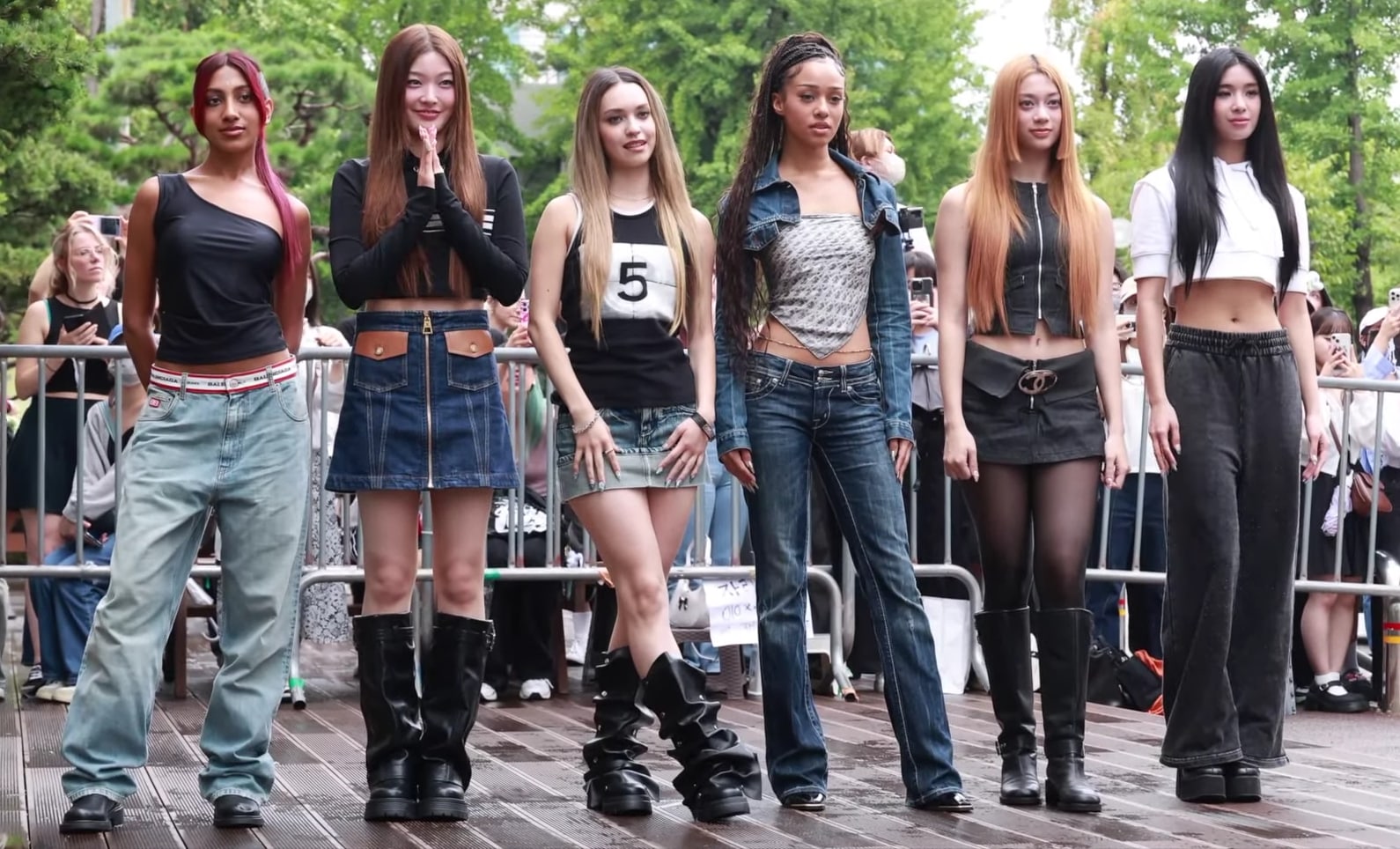
In the past week, HYBE x Geffen’s global girl group KATSEYE has been pulled into a fast-moving controversy that goes far beyond one member stepping back for health reasons. Manon Bannerman’s temporary hiatus—announced formally through the group’s Weverse notice—has become a proxy debate about how K-pop’s industrial system translates (or fails to translate) when the group itself is multinational, multilingual, and marketed as “global” from day one.
What happened, and why it escalated
The confirmed fact pattern is straightforward: KATSEYE’s team announced that Manon would take a “temporary hiatus” to focus on her “health and wellbeing,” while the remaining members continue scheduled activities.
But the public reaction did not stay in the lane of well-wishes. Over the following days, the hiatus announcement became entangled with two other dynamics:
- A credibility gap around “health hiatus” language.
In idol industries, “health” can be both a genuine reason and a catch-all category that avoids specifics. That ambiguity often produces the same pattern: supporters prioritize privacy and recovery, while skeptics treat the vagueness as evidence of something being concealed—conflict, burnout, contractual pressure, or imminent departure. Teen Vogue’s timeline framing captures how quickly the conversation expanded from the hiatus itself into broader interpretations about what might be happening behind the scenes. - A secondary backlash over commentary tied to the group’s inner circle.
A Korea Times report describes how remarks attributed to a fellow member’s father (circulating online and framed by critics as attacking or undermining Manon) intensified division inside the fandom and pushed the story into a workplace-culture argument—about who is protected, who is blamed, and how quickly narratives harden when “family” commentary enters the chat.
Even when the underlying claims are contested or fragmented, this is the mechanism of modern pop controversies: one official announcement creates an information vacuum; social platforms rush to fill it; then a second spark (a screenshot, a quote, a perceived slight) provides a storyline that feels “explanatory,” whether or not it’s fully verifiable.
Why it’s controversial
At least three disputes are happening simultaneously—often with people talking past each other.
Dispute A: Is this simply a health break, or a symptom of an unhealthy system?
One side argues the announcement should be taken at face value: a 23-year-old is prioritizing wellbeing, and the audience’s job is to respect boundaries. That view aligns with the statement’s wording and with the broader push—especially post-2020s—against treating idols as infinitely available labor.
The opposing view treats the hiatus as evidence that K-pop’s production model is still built on intensity—tight schedules, constant visibility, and a performance-first mindset—and that exporting the model without redesigning it simply exports the pressure. A recent explainer explicitly frames the situation as reigniting debate over whether K-pop’s methods are partly to blame when applied beyond Korea’s usual trainee-and-agency context.
Dispute B: What does “global group” mean in terms of care, power, and voice?
KATSEYE is an emblem case: a HYBE partnership with a major U.S. label, built through audition-show infrastructure, aimed at a worldwide market. That “global” ambition raises expectations that support systems—health accommodations, communications norms, internal governance—will match the group’s international branding. When a hiatus happens, scrutiny lands not only on the group but on the cross-border management stack: who decides messaging, what HR-like protections exist, and whether conflict resolution practices are consistent across cultures.
Dispute C: Are fans seeing a familiar pattern in who gets the benefit of the doubt?
A portion of the discourse has focused on representation and differential treatment—particularly the argument that Black women in pop spaces (including K-pop-adjacent projects) experience faster suspicion, harsher policing of behavior, and less institutional protection. Coverage of the backlash has noted that some supporters connect Manon’s experience to wider patterns rather than treating it as an isolated incident.
Notably, these three disputes can all be “true concerns” at once: it can be a legitimate health hiatus and a predictable byproduct of high-velocity pop systems and a moment where fans debate fairness through the lens of identity and power.
How different sides are reacting
Labels/official channels are holding a conventional line: supportive language, minimal detail, continuity of schedule. That’s the standard risk-managed approach—protect privacy, reduce speculation—yet it can backfire when ambiguity invites interpretation.
Fans are splitting into recognizable camps:
- “Leave her alone / health first” supporters who treat speculation as harm.
- “Something isn’t adding up” skeptics who distrust corporate messaging.
- “This reveals structural bias” advocates who center equity and representation as the core issue.
Commentators and media are, increasingly, treating the story less as celebrity gossip and more as a case study: what happens when K-pop’s hyper-optimized system becomes a template for multinational acts—and when fandom becomes a kind of unpaid compliance layer, enforcing norms while also demanding accountability.
What this reveals about broader trends
This episode spotlights a key tension in 2026 entertainment: globalization without governance. The industry has proven it can globalize aesthetics, training, and rollout strategy. The unresolved question is whether it can globalize the less glamorous parts—labor standards, mental health protocols, crisis communications, and internal accountability—at the same speed.
KATSEYE’s situation is being debated so intensely because it touches the industry’s next phase. If “global K-pop” is the export, then the controversy isn’t only about one hiatus. It’s about what the system must change so that stepping back for health isn’t automatically interpreted as scandal—and so that multinational groups aren’t asked to carry the stress-test of an industry transition in public.
“Katseye at Music Bank on September 12, 2024” by TV10 , sourced from YouTube, licensed under CC BY 3.0.




Leave a Reply