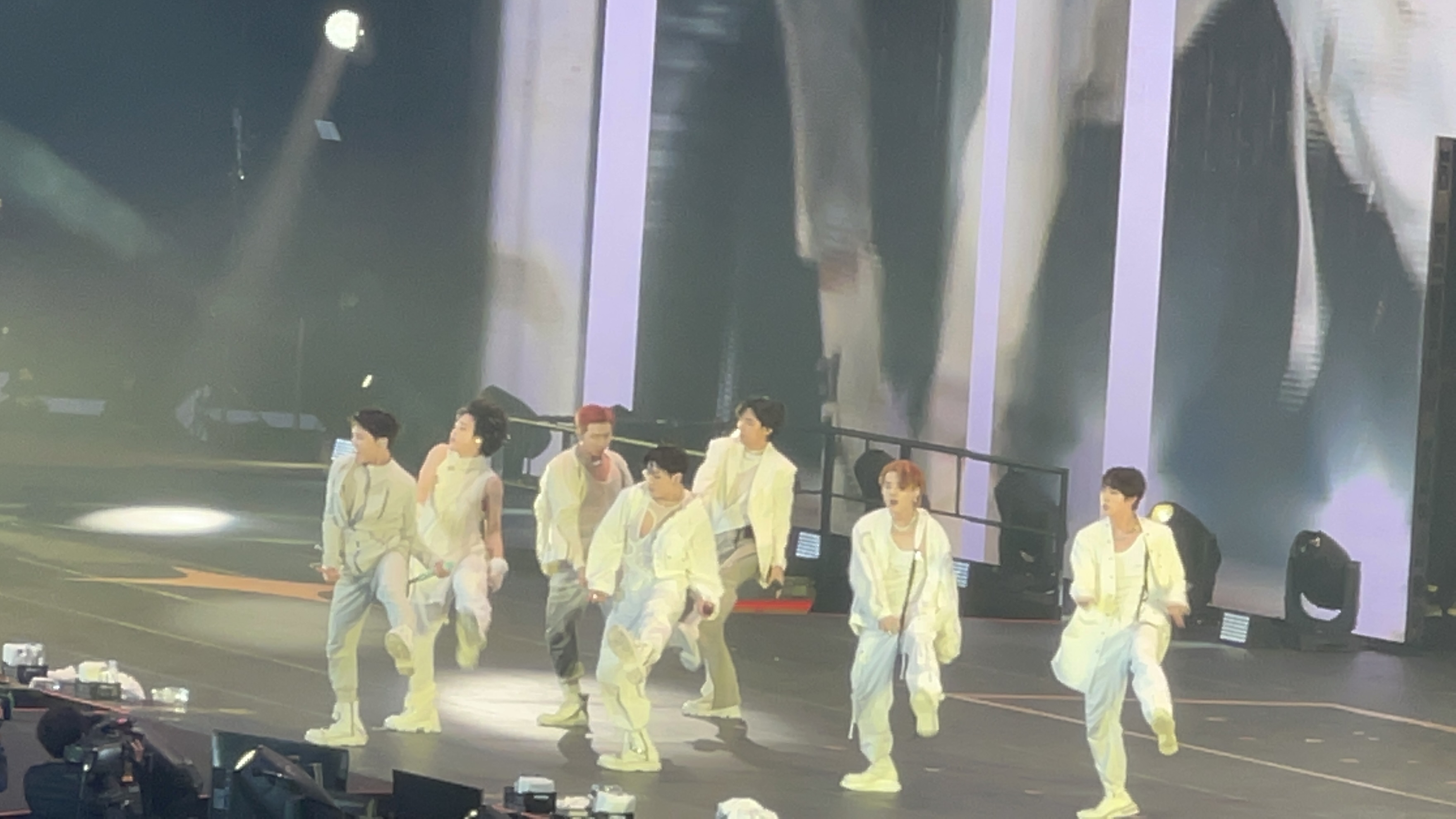
On February 23, 2026, 15,000 free tickets for BTS’s March 21 comeback show at Seoul’s Gwanghwamun Square disappeared almost instantly. Reports of site slowdowns, “PC café” ticketing sprints, and resale scams followed within hours. Seoul police said they were already moving to take down posts advertising proxy purchases or resales, and city officials prepared for crowd-control on “virtual stadium” terms—29 entry points, transit disruption, and a security posture more like a mega-match than a plaza concert.
That scramble is the headline. The bigger development is structural: South Korea has now put concert ticket scalping in the same legislative frame as other “cultural industry” distortions—an attempt to treat resale abuse less like an annoying side effect of fandom, and more like a market failure that undermines public trust in one of the country’s most visible exports.
Why ticketing is suddenly the industry’s pressure point
K-pop’s revenue mix has been changing for years. Physical albums, collectible packaging, and fan-sign incentives still matter, but live performance has become the center of gravity for top-tier acts and global tours. Touring has also become more expensive—larger productions, heavier staffing, more security, and higher insurance costs—pushing promoters to protect margins where they can. In that context, ticketing becomes the choke point: it is where demand concentrates, where fraud can spread quickly, and where consumer anger is most visible.
What makes K-pop distinct is how tightly live access is bound to identity and participation. For many fans—especially students and young workers—attending a concert is not just entertainment consumption but a proof-of-belonging ritual. When “good” access appears to be locked behind VIP bundles, add-ons, or tiered pricing ladders, debates stop being purely economic and become cultural: who gets to be “inside” the phenomenon. Recent Korean coverage has repeatedly pointed to this friction, noting that the backlash often focuses less on the existence of premium tiers and more on how those tiers are structured and how quickly “affordable” inventory disappears.
Ticketing systems amplify these tensions because they compress a huge audience into a few minutes of competition. When a sale looks like a lottery of internet speed, device advantages, and queue luck, fans tend to interpret outcomes as unfair—even if a platform can show the process was technically consistent.
The legislative pivot: from macro bans to broader anti-scalping rules
South Korea’s new approach targets two longstanding loopholes in anti-scalping enforcement.
The first is evidentiary: older enforcement models often focused on proving the use of automated tools (“macros” or bots). That is difficult in practice because professional resellers rarely leave clean technical fingerprints, and because the line between automation and “optimized” purchasing behavior can be blurry.
The second is structural responsibility: enforcement that focuses mainly on individuals tends to miss the ecosystem that enables large-scale scalping—resale communities, intermediaries, and platforms where proxy purchasing and price inflation can be advertised, coordinated, and normalized.
Reporting around the National Assembly’s revisions describes a package touching multiple statutes, including performance/sports ticketing and illegal distribution of Korean content. The intent is to expand what counts as illegal scalping behavior and strengthen compliance expectations for ticket sellers and online intermediaries—technical and administrative measures, designated reporting functions, and clearer penalties. The policy signal is that scalping is being treated less as a petty violation and more as a systematic distortion that damages consumer trust in the cultural sector.
This shift did not come out of nowhere. Through 2025, public discussion increasingly framed scalping as a widening social problem tied to automation, opaque resale markets, and cross-platform fraud. The policy debate has moved in the same direction as other platform-era regulation: if harms are scaled by digital infrastructure, enforcement must also target the infrastructure.
Why BTS matters here—even when the tickets are free
BTS’s comeback event is a stress test because it combines three accelerants: enormous demand, international attention, and high perceived scarcity. Even with free seats, a resale market can exist through proxy purchasing, account rentals, “handling fees,” or outright scams. “Free” does not eliminate profit; it can simply shift the monetization to services and fees around access.
There is also a public-interest layer. When a single event shifts transit patterns, requires major crowd-control planning, and coincides with accommodation price spikes in central Seoul, ticketing stops being a niche fan complaint and starts looking like urban governance. At that point, resale abuse is not only a consumer fairness issue; it is tied to fraud prevention, public safety, and market order around high-impact events.
In other words, BTS functions as a visibility multiplier. The same behaviors that occur around many concerts become politically and socially legible when they happen at BTS scale.
Why fans are split: fairness versus friction
Fans are broadly aligned in wanting fewer bots, fewer scams, and fewer predatory markups. But they disagree sharply on the enforcement methods most likely to achieve that.
The strongest anti-scalping measures often rely on identity controls: stricter verification at purchase, tighter limits on transfers, and ID checks at entry. These can reduce resale liquidity, but they also create new frictions for legitimate users—gifting tickets, attending with family, correcting a name mismatch, or reselling at face value when plans change. For international fans, rigid ID rules can add language and documentation barriers. For younger fans, they can create dependency on adult purchasers and complex proxy arrangements—the very behaviors enforcement is trying to discourage.
That tension is why “fairness” in ticketing is now understood as much as process design as it is about price. Queue transparency, transfer rules, refund mechanics, and customer support can determine whether an anti-scalping regime feels protective or punitive.
The uncomfortable reality: anti-scalping laws don’t automatically make concerts cheaper
Cracking down on scalping can reduce certain forms of harm: fraud, bot-driven instant sellouts, and resale markups that punish ordinary buyers. But it does not directly address the other driver of backlash: primary-market pricing strategy.
Premium packages, add-ons, and membership-based presales can make participation feel like a layered paywall—even when base prices remain. Fans often describe the modern ticket path as an accumulation of payments across memberships, priority access, perks, and upgrades. Even if resale becomes cleaner, the first sale can still feel exclusionary.
For agencies and promoters, this is a strategic tension. Live shows are increasingly the most defensible revenue stream, but K-pop’s cultural power is partly built on accessibility and youth culture. If the live experience becomes a luxury product, the industry risks thinning the middle of the fandom—fans who don’t disappear but participate less, travel less, and buy fewer marginal products.
What this debate reveals about broader trends
South Korea’s legislative response suggests that concert access is being reclassified as cultural infrastructure. Three trends sit underneath the controversy.
First, K-pop’s live market now creates city-scale externalities—public safety planning, transit management, and local price shocks—especially for marquee events.
Second, entertainment is adopting governance tools once reserved for fintech and large platforms: identity verification, behavioral fraud detection, and stricter account controls. The question is whether these tools can curb abuse without normalizing surveillance-like access requirements.
Third, Korea is increasingly regulating “leakage” in the Hallyu economy—piracy, illegal distribution, and now scalping—framing market legitimacy as part of cultural strategy rather than leaving it to private enforcement.
K-pop helped pioneer a high-intensity, global model of music fandom. Now it is running into a late-stage scaling problem: how to distribute “access” when demand outgrows seats, and when the industry’s most lucrative product is also its most culturally symbolic one. South Korea’s policy pivot signals that the country is no longer treating that problem as mere fan noise. It is treating it as a governance question.
“BTS Permission to Dance On Stage Dec 1, 2021.jpg” by Monbmon, CC BY-SA 4.0 (Wikimedia Commons).



Leave a Reply