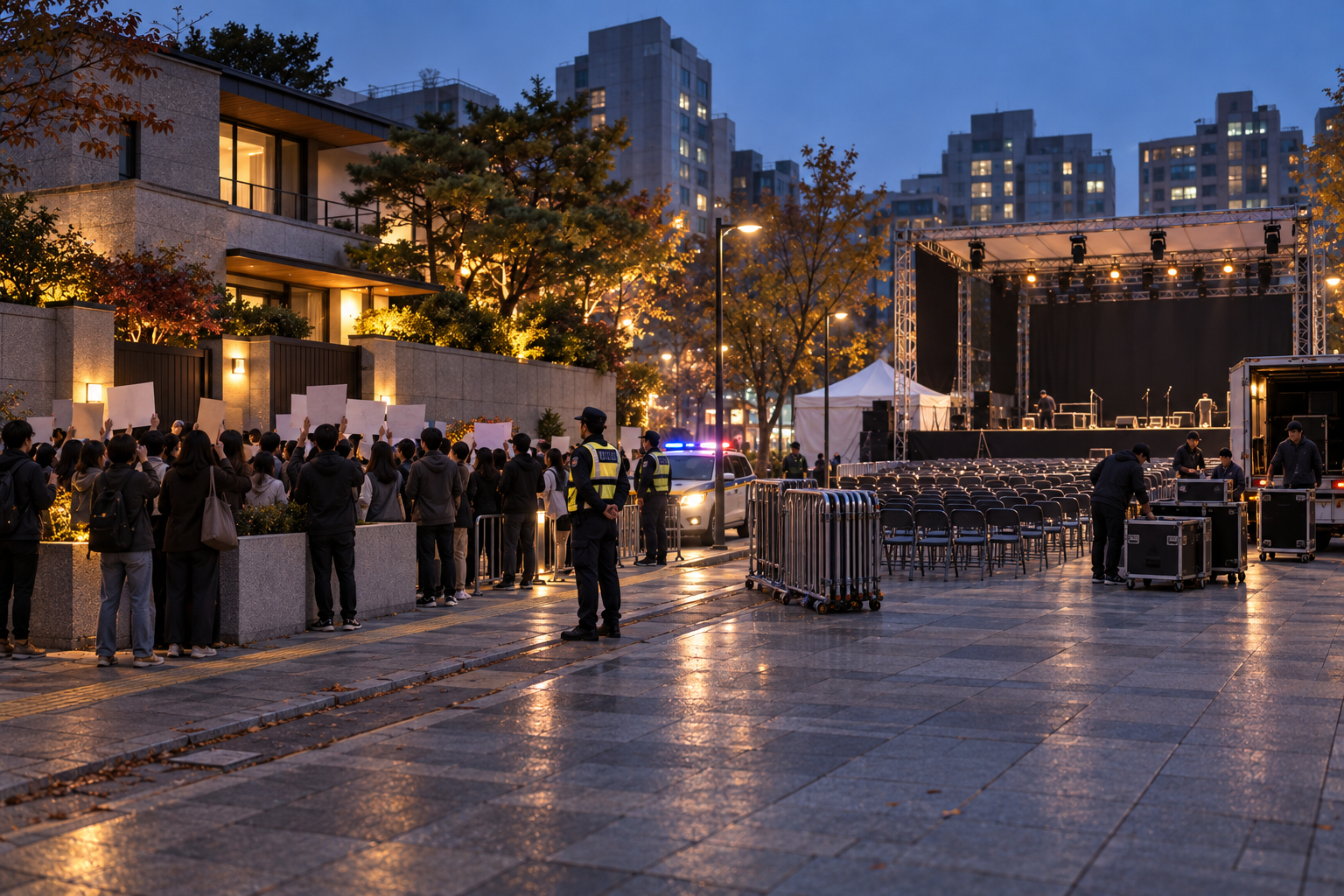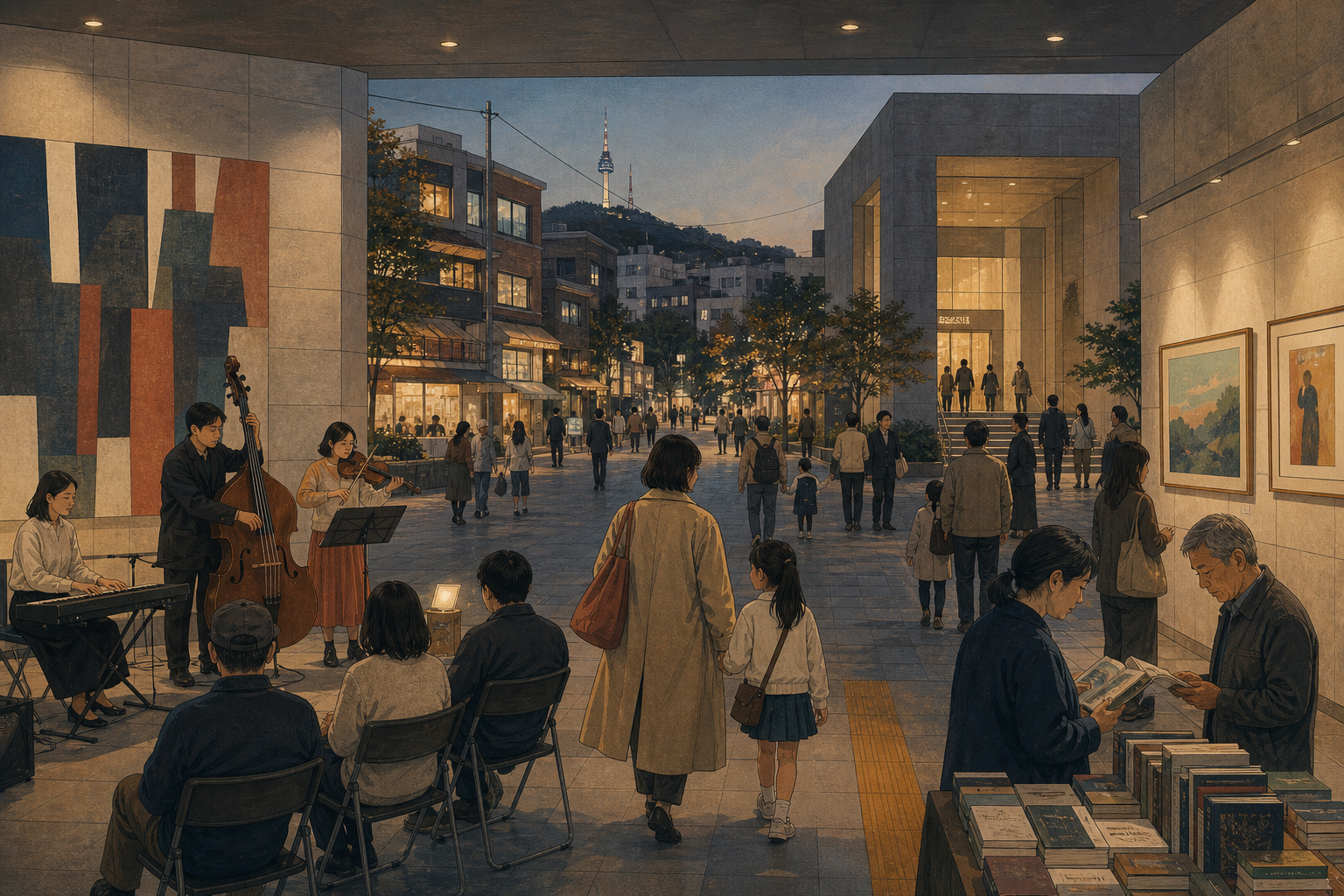
Korea’s expanded Culture Day began with a spectacle in a place designed for transit. On April 1, about 50 traditional musicians, jazz singers, bands and dancers performed “Wednesday Arirang” at Seoul Station. Commuters became an audience without first buying a ticket or making a separate journey.
The setting explained the policy better than a slogan could. The Ministry of Culture, Sports and Tourism had changed Culture Day from the last Wednesday of each month to every Wednesday. What had been a monthly promotion was being recast as a weekly public routine.
April produced the first evidence that institutions responded. The ministry reported that the number of participating facilities was 2.1 times the previous level and the number of operating programs was 5.7 times higher during the first month of the expansion. A policy change had created more places to go and more things to do.
That is the clearest success since launch. It is also a limited one. Facilities and programs measure the supply of cultural opportunities, not how many people used them, who returned, or whether Wednesday has begun to occupy a permanent place in household calendars. The rest of 2026 will be less about proving that the network can expand than showing what that expansion is for.
April proved that the network could move
The first-month figures matter because weekly programming is operationally different from a monthly campaign. A museum can build one discount day into its calendar with relatively little disruption. A venue that participates every Wednesday must decide how often to open late, what to present, how to communicate the offer and whether the additional activity is sustainable.
The 2.1-fold increase in facilities shows that more organizations entered that calculation. The 5.7-fold increase in programs shows that they did not merely register their names; they generated a much larger volume of activity. The gap between the two figures suggests that at least some participating institutions offered more than one occasion or format during the month.
It does not tell us which programs drew an audience. It does show that the expansion changed the practical Wednesday offer. That is a more useful opening result than publicity reach alone.
The launch events also established that Culture Day would not be confined to conventional arts venues. Seoul Station was the largest public example, but the first week included a classical performance in an underground passageway in Gwanak-gu, a city-hall lobby concert in Gwangju and a street parade in Sancheong. Incheon connected a performance to the 80th anniversary of its metropolitan-city museum.
These were not interchangeable events. Their common achievement was to place cultural activity inside settings people already used. A station, passageway or municipal lobby changes the terms of participation: the public can encounter a performance before deciding whether to become a formal audience.
That model cannot replace the concentration of a theatre, gallery or museum visit. Its value lies earlier in the chain. It can make the first encounter easier, reveal a nearby institution, and reduce the amount of planning required to try something unfamiliar. Culture Day works differently when it is not only a discount attached to a destination but also a reason for culture to appear in ordinary civic space.
The monthly program had already shown that timing matters
The weekly expansion did not begin without evidence. According to the ministry, the monthly Culture Day between 2014 and 2023 was associated with average designated-day cinema audience increases of 30% and revenue increases of 15%. Performance venues recorded average audience gains of 9% and revenue gains of 5%.
Those comparisons do not predict the outcome of the 2026 program. A monthly promotion concentrates attention around one date, while a weekly schedule distributes attention across four or five Wednesdays. The older results nevertheless establish an important principle: a shared date can influence when people attend and when institutions promote.
The new policy asks whether that effect can survive repetition. Scarcity helped make the monthly date legible. A benefit available every Wednesday may become easier to use, but it may also become easier to postpone. The policy therefore has to exchange the urgency of a special occasion for the reliability of a habit.
That is a harder cultural proposition. A single attendance surge can be produced by a strong promotion. A weekly rhythm requires institutions to remain visible and audiences to trust that another worthwhile program will appear.
Access depends on the map, not only the calendar
The August Culture Day calendar maintained the breadth suggested by the launch. The Regional Culture & Development Agency listed free museum admission in Gunsan, late-night reading at independent bookstores, gallery workshops and performances connected to local history. The variety is not decorative. Different formats answer different barriers.
A commuter performance reduces travel and planning. A free museum day reduces price. A bookshop event can serve a smaller neighborhood audience. A workshop offers participation rather than observation. No single format can represent cultural access for everyone, and a national program becomes more useful when local institutions can decide which barrier they are equipped to lower.
The geographic test is equally important. The ministry has announced about 450 tailored programs for rural, fishing and mountainous areas during 2026. The Cheongchun Mic Synergy youth-performance program directs selected teams toward places with relatively low cultural access and requires them to perform at least three times during the year.
Those commitments recognize a persistent weakness in national cultural initiatives: the calendar may be national while the practical choices remain concentrated in large cities. A Wednesday designation means little where transport is difficult or programming is too occasional to be predictable.
The useful measure will not be whether every locality receives the same program. It will be whether residents outside established cultural districts gain repeated, identifiable opportunities. National coordination should make Wednesday recognizable; local programming should make it relevant.
Private participation will determine part of that reach. The ministry allows private institutions and organizations to register for Culture Day, extending the network beyond directly administered venues. Museums, bookshops, performance spaces and local organizers can use the national frame while retaining control of the event itself.
That arrangement has an advantage and a risk. It allows rapid expansion without prescribing one cultural product. It also makes consistency dependent on organizations with different budgets, staffing and incentives. April showed that many participants could be mobilized. The year-end question is how many remain active when the launch period has passed.
What success should mean by December
Three tests would provide a more complete account of the weekly policy.
The first is continuity. Do the facilities counted in April continue to offer programs through autumn and winter, or was the initial increase concentrated around launch? A cultural habit needs dependable repetition even when individual events change.
The second is geographic reach. Do the promised tailored programs produce recurring choices in rural, fishing and mountainous communities, or do the most visible benefits remain clustered around places that already have cultural infrastructure?
The third is audience development. Supply data should eventually be accompanied by evidence about use: attendance, repeat participation, the mix of first-time and established visitors, and the types of programs that sustain interest. Those measures should remain separate rather than being collapsed into one headline number. A ten-minute station encounter and a return museum visit are different forms of participation, and both can be meaningful.
Communication will affect all three. A weekly initiative is useful only when residents can quickly discover what is happening near them. Clear local listings, stable times and recognizable Culture Day labeling can turn a scattered collection of events into a public routine. Without that information layer, even a large program count may remain difficult to use.
The April launch supplied genuine success stories: Seoul Station demonstrated how a cultural encounter could enter a commute; regional events showed that the model could adapt to different civic spaces; and the first-month figures confirmed that institutions were willing to expand the offer. None of those results proves that a weekly habit has formed. They give the program a credible base from which to try.
Through the rest of 2026, the most persuasive outcome would not be another spectacular launch. It would be quieter evidence of durability: a resident who knows to check Wednesday’s local listings, an institution that keeps programming after the campaign recedes, and a community that gains a cultural option it did not previously have.
Culture Day cannot substitute for stable arts funding, affordable admission or strong local venues. It can make those resources easier to encounter. Its ambition is modest but consequential—to make culture feel less like an exception that must be arranged and more like an ordinary possibility in the middle of the week.