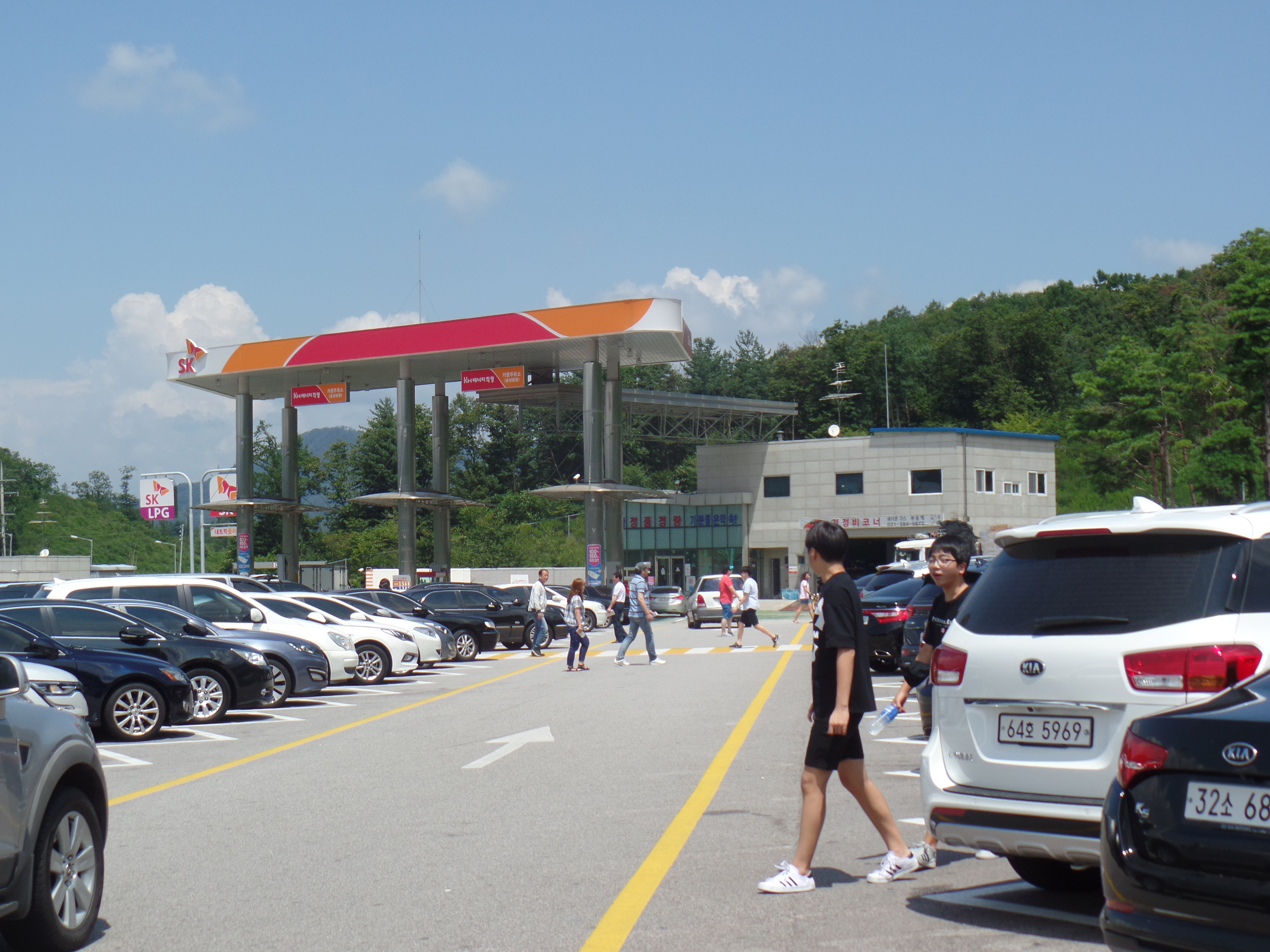
In South Korea, fuel prices are never just about fuel. They are about commutes, delivery costs, food inflation, and the public mood. So when pump prices rise sharply, the issue does not stay confined to the energy market for long. It becomes political, emotional, and highly visible — the kind of pressure that flashes in large digits on roadside signs and instantly tells households that the cost of ordinary life may be moving up again.
That is the backdrop to the government’s latest intervention. Seoul has launched nationwide inspections of gas stations to check pricing and fuel quality as domestic fuel costs surge, with officials saying the goal is to deter price gouging and other unfair practices. Authorities have said the campaign will involve more than 2,000 inspections a month, with a joint government team and related agencies focusing on suspicious pricing behavior and illegal petroleum distribution.
The timing matters. Recent Korean reporting says domestic fuel prices jumped unusually fast as Middle East tensions pushed global oil markets higher. One Seoul Economic Daily report, citing Opinet, said regular gasoline rose 54.48 won per liter (about 14 U.S. cents per gallon) in a single day, underscoring how quickly international turmoil can translate into visible consumer pain at home.
What the government appears to fear is not only higher prices, but the space that a genuine external shock can create for opportunism. Officials have said inspectors will directly visit gas stations suspected of profiteering, while broader monitoring will look for hoarding, unfair pricing behavior, and possible collusion. In that sense, the crackdown is not merely about economics. It is about drawing a line between legitimate market pass-through and abuse.
There is also a second objective: consumer reassurance. Fuel inflation has a uniquely public character. Rent hikes arrive quietly. Grocery inflation is scattered across dozens of items. But gas prices announce themselves all at once, in bright numbers visible to every passing driver. By sending inspectors into the field, the government is signaling that it is not leaving motorists alone with the market — and that it understands the symbolic power of the pump. This is enforcement, but it is also political theater in the most practical sense: a visible performance of oversight.
The administration is pairing that enforcement posture with a softer buffer. South Korea extended its temporary fuel-tax cut through April 30, keeping reductions at 7 percent for gasoline and 10 percent for diesel and LPG butane. According to government-backed reporting, that preserves a price-lowering effect of about 57 won per liter for gasoline and 58 won for diesel compared with pre-cut tax levels.
That matters because inspections alone cannot reverse a global oil rally. At best, they can reduce the room for abuse and slow panic-driven distortions. Tax policy can cushion consumers, but only to a point. The state can supervise the market; it cannot fully overrule international crude prices. That is why the more revealing signal may be what officials are saying next. Reports indicate the government and ruling party are also prepared to consider a fuel price cap if conditions worsen, a sign that Seoul views this as a broader inflation and confidence problem, not just a sector-specific flare-up.
At the same time, the government has tried to calm fears of a physical supply crisis. Officials have said South Korea holds roughly 208 days of oil reserves, suggesting that the immediate threat is not shortage so much as volatility and market behavior. That distinction is important. Consumers may still pay more, but Seoul wants to prevent the impression that a pricing surge automatically means a supply emergency.
The deeper story, then, is about governance under inflation stress. South Korea is not promising cheap fuel. It is promising scrutiny. In a moment of global instability, that may be the most credible promise any government can make: that even if it cannot stop the shock, it will try to stop the exploitation that can grow around it. And for drivers watching those numbers tick upward, that distinction may be the one officials hope matters most.
“Seoul-Yangyang Expwy Gapyeong Service Area Parkinglot and Gas Station (Yangyang Direction)” by Jhcbs1019, via Wikimedia Commons, licensed under CC BY-SA 4.0.




Leave a Reply