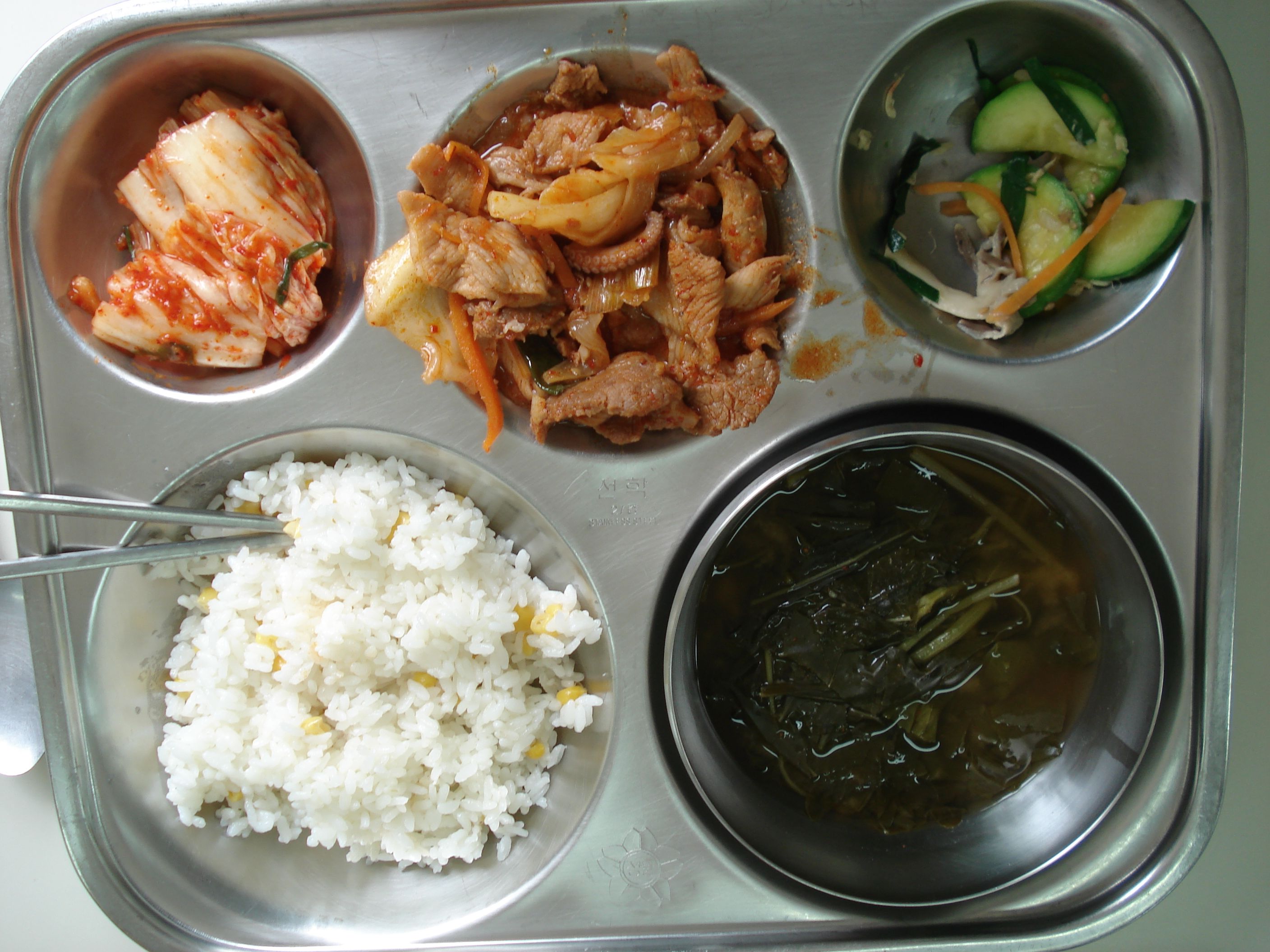
What began as students comparing cafeteria trays has grown into a broader argument about whether public services in Korea feel equal across regions.
It started with photos.
Students and online users in South Korea began posting images of school lunches side by side, comparing trays from different regions and schools. Some looked plentiful and balanced. Others looked sparse, repetitive, or plainly less appealing. The images spread quickly, not just because food photos travel easily online, but because the contrast felt instantly legible. No explanation was needed. People could look once and decide whether something seemed unfair.
But as often happens in Korea’s online spaces, the conversation moved fast from the specific to the structural. What began as a debate over cafeteria quality widened into a broader argument about regional inequality, local government priorities, and whether public services are really as universal as they are supposed to be.
That shift explains why the issue resonated so strongly. School lunch in Korea is not treated as a minor convenience. It is one of the country’s most visible everyday public services, experienced by millions of students almost every school day. When people see obvious differences in quality, they are not only judging taste or presentation. They are asking a larger question: should something this basic depend so much on where a child lives?
That is what made the lunch photos feel bigger than lunch.
In theory, school meals in Korea are backed by a national framework. They are tied to educational welfare, health, and child development rather than being treated as an optional extra. There are standards, expectations, and a long-running public understanding that school lunch is part of what the state owes students. That is one reason Korean school meals are so often discussed with unusual seriousness compared to school cafeteria debates elsewhere. Lunch is not just lunch. It sits at the intersection of education, family burden, nutrition, and public trust.
And because it is so visible, it becomes a powerful symbol when something looks off.
Most people do not spend their time reading local education budgets or studying how provincial education offices allocate resources. But they immediately understand a lunch tray. A tray makes inequality concrete. It turns abstract policy differences into a single daily image. One student gets variety, fresh-looking side dishes, and a meal that appears carefully put together. Another gets something that looks cheaper, thinner, or less consistent. The gap may be shaped by procurement systems, staffing conditions, local funding, or administrative differences, but online it appears in its simplest form: one meal looks better than another.
That simplicity is what gives the debate its force.
The deeper discomfort comes from the fact that Korean public life already contains a familiar anxiety about regional gaps. Housing, infrastructure, education opportunities, eldercare, medical access, and youth outmigration are often discussed through the lens of Seoul-versus-non-Seoul inequality or capital-area concentration. So when school lunch comparisons started spreading, many people saw them as part of an existing pattern rather than a surprising one. The trays became evidence, however incomplete, for something many already suspected: that the quality of ordinary public life can vary more than official rhetoric suggests.
That is why the discussion quickly expanded into municipal budgeting priorities.
When people say the lunch debate is “really” about budgets, they do not necessarily mean there is one simple budget line that explains every disappointing meal. They mean that school meal quality does not exist in a vacuum. It depends on funding levels, ingredient costs, labor conditions, kitchen staffing, procurement structures, and how much protection local authorities are willing or able to give to frontline services. In a period of inflation and tighter local finances, even small differences in capacity can become visible in very ordinary ways.
A school lunch tray is one of those ways.
There is also a labor story beneath the food itself. A good lunch program is not only about ingredients. It depends on stable staffing, working kitchens, manageable workloads, and people who can consistently prepare meals at scale. When staffing is strained or kitchen work becomes harder to sustain, quality can slip even if the official standards stay the same on paper. That helps explain why school lunch debates in Korea often end up touching not just nutrition, but working conditions and public-sector support.
This is part of what makes the current backlash feel more serious than a fleeting viral complaint. People are not only mocking bad meals or envying better ones. They are reading lunch quality as a measure of how seriously local systems are taking children’s everyday welfare.
That emotional logic matters.
School lunch is one of the rare public services that people can see, photograph, compare, and judge immediately. Unlike many other forms of inequality, it does not require data literacy or policy expertise to detect. It arrives every day on a tray. That daily visibility makes it politically and culturally potent. If a service that is supposed to be broadly guaranteed starts to look uneven, the gap feels harder to excuse. It feels personal. It feels repetitive. And because the subjects are students, it feels morally sharper.
The result is that a familiar kind of Korean internet debate has turned into something closer to a civic argument. On one level, people are still doing what online communities always do: comparing, reacting, exaggerating, and arguing over who has it better. On another level, the conversation is tapping into a deeper national unease about whether universal systems still feel universal in practice.
That may be the real reason the story has stayed alive.
The school lunch posts went viral because they were easy to share. They kept spreading because they gave people a simple image for a much larger frustration. In Korea, public inequality is often discussed through statistics, policy plans, and regional development strategies. This time, it appeared in the form of soup, rice, side dishes, and portion size.
And once that happens, the issue stops being only about food.
It becomes a debate about what fairness is supposed to look like in everyday life — and whether Korea is delivering it equally.


Leave a Reply