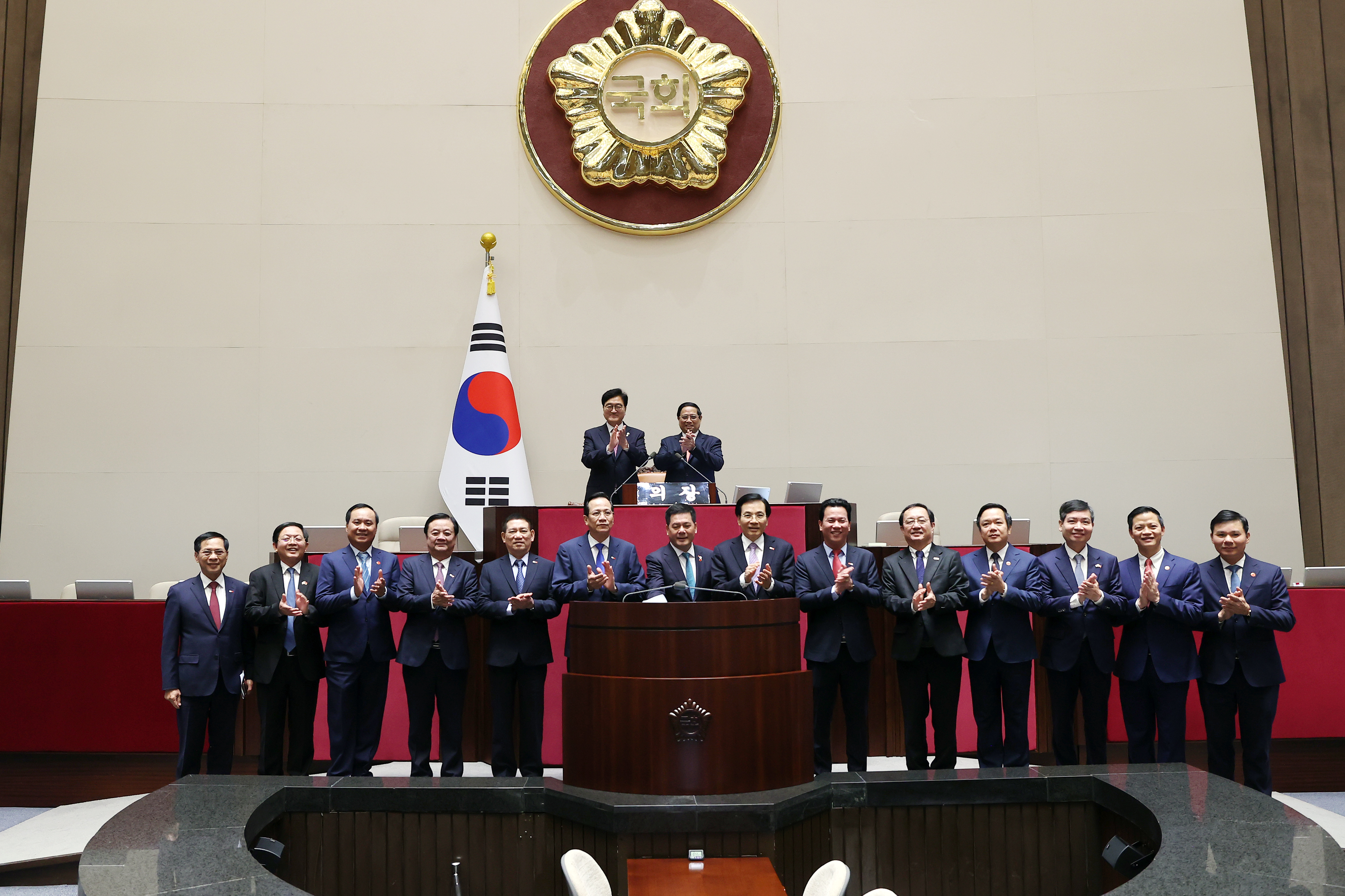
South Korea’s latest corporate-governance reform is a classic example of policy attacking a market problem at the level investors actually price: share count, control, and credibility. On Wednesday, Feb. 25, 2026, the National Assembly passed a Commercial Act revision requiring listed companies to cancel newly acquired treasury shares within one year—a rule meant to make buybacks behave like buybacks, not like management’s Swiss Army knife.
The reform sits squarely inside Seoul’s broader “value-up” agenda: narrow the “Korea discount,” lift shareholder returns, and convince global allocators that governance improvements are structural rather than cyclical. With the Kospi already trading at record levels above 6,000, lawmakers are trying to lock in a more durable re-rating by forcing cleaner capital-return mechanics.
What the law changes—and why investors care
Treasury shares are stock a company repurchases and holds. In many markets, the implicit promise of a buyback is simple: fewer shares outstanding, higher earnings per share, and (all else equal) a higher per-share valuation. Korea’s twist has been that companies often repurchased shares and then kept them on the balance sheet, preserving optionality for future use—M&A consideration, intra-group restructuring, employee programs, or as “ammunition” in control disputes—without necessarily delivering lasting per-share accretion.
The new rule aims to remove that ambiguity. If a firm buys back shares, it must cancel them within a year, forcing a permanent reduction in share count rather than allowing treasury stock to linger as a strategic asset. Supporters argue this is precisely the point: it turns a headline repurchase into a measurable corporate action with predictable per-share consequences.
The political economy: governance versus “control insurance”
If you want to understand why this became a floor fight, don’t start with valuation multiples—start with control. Investors have long argued that the “Korea discount” reflects not just capital allocation, but how control is maintained inside chaebol-heavy corporate structures. A buyback that is never retired can strengthen insiders indirectly, because treasury shares can be redeployed later in ways that don’t prioritize minorities.
That’s also why business groups have pushed back hard. Treasury shares have functioned as a form of “control insurance”—a flexible tool in hostile-takeover scenarios and governance contests. Korea JoongAng Daily captured the corporate concern bluntly: mandatory retirement could weaken defenses against hostile bids and narrow management’s toolkit.
The reform is therefore more than a “shareholder-friendly” tweak. It’s a redistribution of optionality—from boardrooms toward shareholders—implemented through accounting reality: retired shares cannot be used later.
Market implications: credibility premium, not instant EPS magic
The immediate market effect shouldn’t be overstated. The law does not compel buybacks; it changes the payoff structure of buybacks. That matters because it alters corporate incentives:
- Buybacks become less reversible. Boards that used repurchases as a temporary balance-sheet maneuver must now treat them as a commitment to shrink float.
- Dividends may look relatively more attractive. If firms want flexibility, cash returns can sometimes be easier to calibrate than forced share retirement.
- Deal and defense tactics may migrate. If treasury shares become less usable, companies may lean more on alternative structures (within legal bounds) to preserve strategic flexibility.
In other words, the policy is designed less to create a one-off rally than to increase the credibility premium investors assign to Korean capital-return announcements.
What happens next: implementation, edge cases, and the next reform wave
The next step is implementation—how companies operationalize the one-year clock, and whether guidance introduces exceptions or procedural requirements that blunt (or reinforce) the law’s intent. Korea’s business press has already emphasized the debate over global comparability and corporate flexibility, suggesting the argument will migrate quickly from politics to practical compliance.
For investors, the significance is cumulative. Treasury-share cancellation is not a silver bullet for the “Korea discount,” but it targets a highly visible credibility gap: buybacks that didn’t reliably reduce share count. If Seoul pairs this with continued governance reforms—director duties, minority protections, and stewardship expectations—the market may treat the “value-up” push less as a campaign and more as an investable regime change.
Photo: National Assembly of the Republic of Korea / Wikimedia Commons (KOGL Type 1)




Leave a Reply