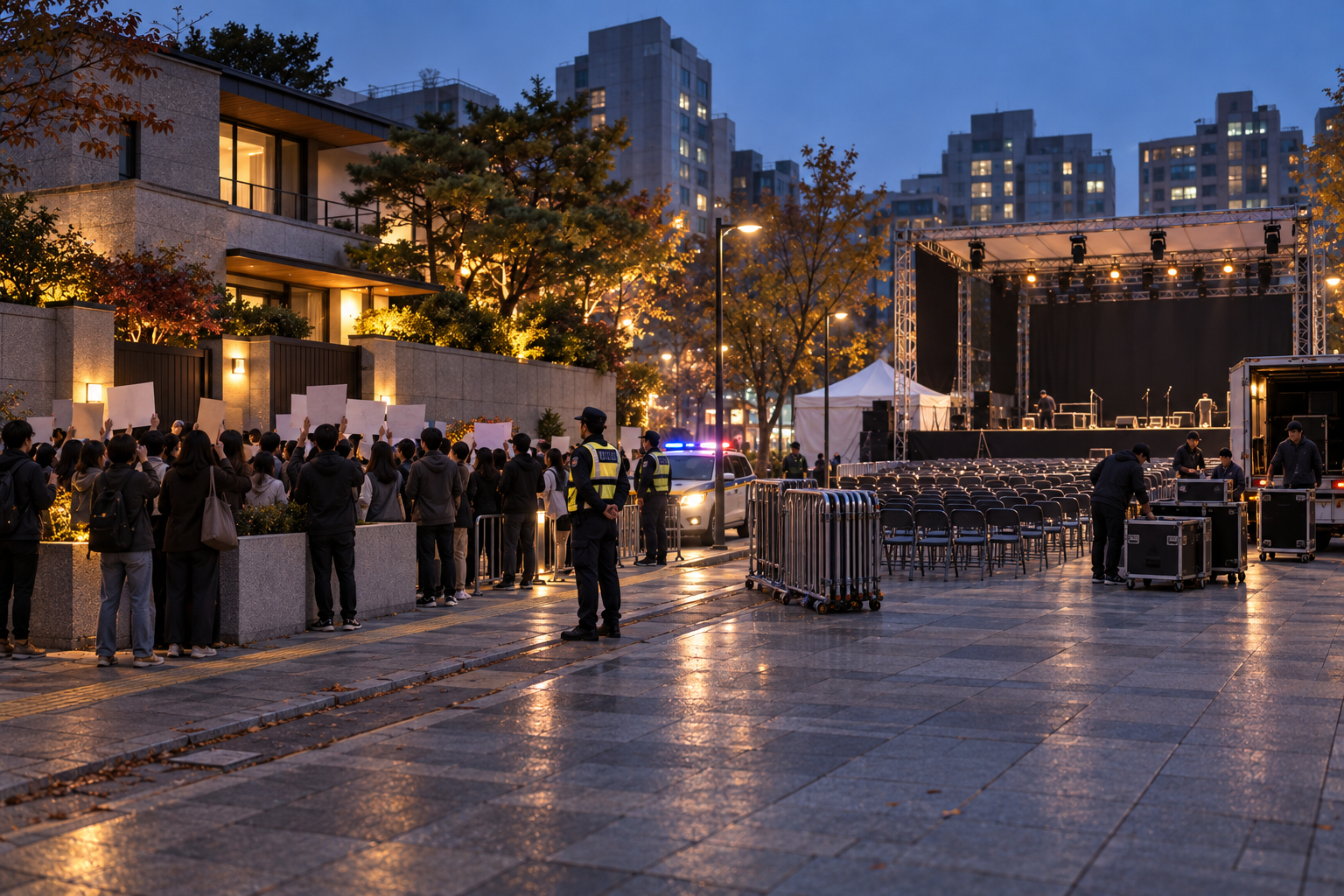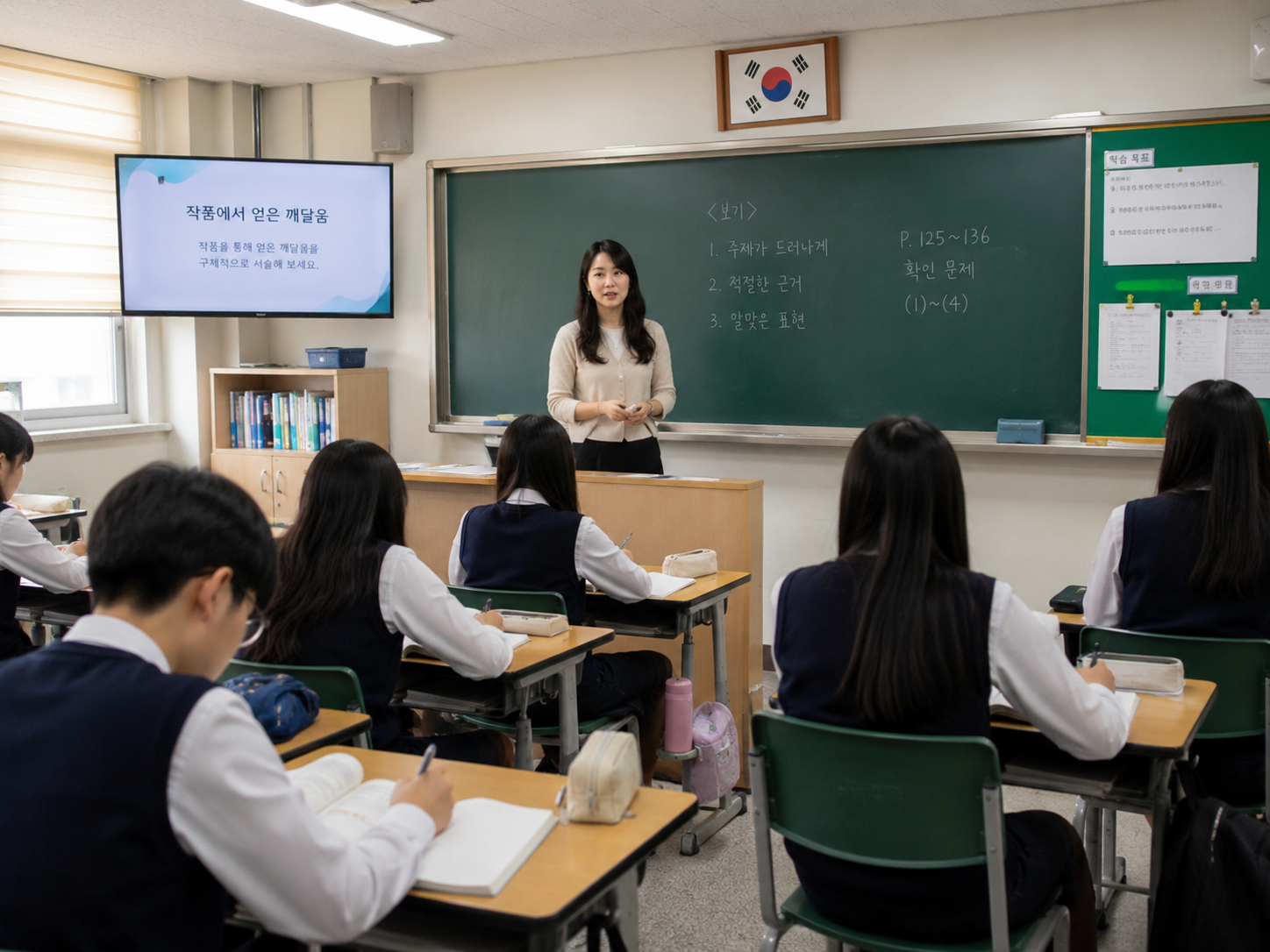
South Korea’s latest school-authority debate is not one controversy. It is several anxieties collapsing into one another: teachers accused of child abuse after classroom discipline, parents using complaint systems as leverage, students who test the limits of school authority, victims who feel unprotected, and a juvenile-justice system that the public increasingly sees as too slow or too opaque.
That is why the issue has moved beyond education policy. It now belongs to a broader national argument over authority, protection, punishment and institutional trust.
The immediate trigger is a new wave of reporting on child-abuse allegations against teachers. According to Ministry of Education data reported by Hankook Ilbo and The Korea Times, parents filed 1,870 child-abuse reports against kindergarten, elementary, middle and high school teachers between September 2023 and February 2026. Local education offices classified about 72 percent of those cases as lawful classroom management. Among concluded cases, 90.4 percent ended without charges.
Those figures are striking because they expose the core imbalance teachers describe: even when a case ends with no charges, the process can still damage a teacher’s career, mental health and authority in the classroom.
At the same time, a separate but related debate has sharpened over children under 14, who cannot face criminal punishment in South Korea. A recent car-theft case involving 12-year-olds revived public frustration over the criminal-liability threshold, even as a government deliberation process moved toward keeping the threshold at 14 while strengthening juvenile justice and victim support.
The two issues should not be merged too casually. A child-abuse report against a teacher and a juvenile offense by a child are legally different matters. One concerns adult professional conduct. The other concerns developmental responsibility, rehabilitation and public safety. But they now share the same political atmosphere: a growing belief that Korea’s schools and youth-protection systems are struggling to respond when conflicts fall between education, welfare, policing and law.
That is also why Netflix’s Teach You a Lesson has become such a revealing cultural object. The drama’s fictional education-rights agency is not a policy model, and its violent fantasy should not drive legal reform. But its popularity shows how widely the school-authority crisis now resonates. The fantasy works because many viewers believe the real system has become too weak, too slow or too afraid to intervene.
The child-protection paradox
Child-abuse law exists for a necessary reason. Children need protection from violence, humiliation, coercion, neglect and emotional harm. Schools should never become spaces where adult authority is shielded from scrutiny simply because it is called discipline.
But teachers argue that the current system often fails to distinguish abuse from ordinary classroom management quickly enough. The most difficult area is emotional abuse. Physical abuse may leave clearer evidence. Emotional abuse can be real and serious, but in classroom disputes it can also become a broad accusation based on subjective interpretation: a reprimand, a forced apology, a seating change, a confiscated item or a teacher’s attempt to stop conflict between students.
For teachers, the danger is not only being punished. It is being investigated.
A child-abuse report can remove a teacher from normal classroom life before any conclusion is reached. The teacher may take sick leave, face police questioning, hire legal help, avoid contact with students and colleagues, and eventually transfer schools even after being cleared. The allegation can become the punishment, especially in a profession built on trust.
This is the paradox now at the center of Korean education policy. A child-protection system must be strong enough to catch real abuse. But if it is vague enough to treat ordinary guidance as a criminal matter, teachers may stop guiding students at all.
When that happens, the harm spreads beyond the accused teacher. Other students lose learning time. Administrators become more risk-averse. Parents become more likely to escalate complaints because informal trust has broken down. Students who need boundaries receive weaker intervention. A system built to protect children can end up weakening the classroom conditions children need.
Why no charges do not mean no damage
The Ministry of Education figures matter because they suggest that many reports against teachers are not ending as confirmed abuse. But the deeper issue is what happens before a case is closed.
Teachers describe a process in which they are treated as the direct target of the complaint, even when the dispute is really about school policy, classroom rules or parent-school communication. Education offices may provide support, but the teacher still experiences the investigation personally. A no-charge result months later does not restore the lost semester, the damaged reputation or the fear that the same thing could happen again.
Teacher groups are therefore pushing for legal and procedural reforms. One proposal would allow police to close cases more quickly when an education office has already determined that the teacher’s conduct was lawful classroom management. Another would revise how emotional-abuse provisions apply inside schools, so that educational context is formally considered before ordinary discipline is treated as potential criminal conduct.
The Ministry of Justice and child-protection officials are understandably cautious. A system that dismisses allegations too quickly could fail abused children. But teachers’ frustration is not simply about wanting immunity. It is about the absence of a credible filter between a parent’s accusation and a teacher’s criminal exposure.
The best reform would not weaken child protection. It would separate three categories more clearly: genuine abuse, poor professional judgment and lawful classroom guidance. Each requires a different response. Criminal investigation is appropriate for the first. Training or administrative correction may be appropriate for the second. Institutional protection should be available for the third.
Parent complaints and the collapse of middle ground
The teacher-authority crisis is also a parent-communication crisis.
South Korean parents are deeply invested in children’s education, often with good reason. The school system is competitive, high-stakes and emotionally charged. Parents want accountability when their children are mistreated, ignored or harmed. But the complaint system has also become a tool of pressure. Repeated calls, threatening messages, accusations, online exposure and demands for apologies can push schools into defensive behavior.
When schools lack trusted middle-ground procedures, conflicts escalate. Parents may feel that only a formal report will force the school to act. Teachers may feel that any conversation with a parent can later be used against them. Administrators may try to settle quickly rather than defend a teacher publicly.
That leaves everyone less protected. Parents do not get a transparent process. Teachers do not get institutional backing. Students see adults negotiating fear rather than authority. The classroom becomes less a learning community than a liability field.
Korea’s recent policy proposals acknowledge this problem. The idea of routing complaints through official school channels, separating malicious complaints from legitimate concerns and making institutions rather than individual teachers the first point of response is an important shift. The question is whether it will be implemented strongly enough to change school culture.
The juvenile-justice debate enters the same frame
The under-14 criminal-liability debate belongs in this article because it reveals the same public anxiety from another direction.
Under South Korean law, children under 14 cannot be criminally punished. Children aged 10 to under 14 may instead be sent through juvenile proceedings and receive protective measures such as supervision, counseling, education, community service, probation-like monitoring or placement in juvenile facilities. The system is designed around correction and rehabilitation rather than criminal punishment.
That distinction is often lost in public debate. “No criminal punishment” does not mean “no consequence.” But to victims and the wider public, the system can look weak when serious cases involve children who are too young to be charged criminally.
A recent car-theft and unlicensed-driving case involving 12-year-olds made the issue concrete. Police said elementary school students stole vehicles and drove dangerously; after repeated conduct and concern over reoffending, some were placed in juvenile protective facilities through emergency escort warrants. The case undercut the assumption that under-14 offenders are always simply released to parents, but it also showed why the public remains anxious: when the offense is dangerous, the gap between criminal punishment and protective disposition can feel too wide.
That is why the government’s recent deliberation over the age threshold matters. Calls to lower the age have remained strong, especially after violent school-crime cases. Yet the emerging recommendation is to keep the criminal-liability threshold at 14 while strengthening the juvenile-justice system and victim support.
That is a defensible position only if the protective system works. Rehabilitation cannot be a slogan. It must mean fast assessment, meaningful supervision, mental-health and family intervention, school coordination, separation of high-risk repeat offenders from lower-risk children and real information for victims. If protective dispositions are perceived as symbolic, public pressure for harsher punishment will return after every viral case.
Victims cannot be invisible
One reason juvenile-justice debates become punitive is that victims often feel erased.
Juvenile proceedings are generally closed, and victims may not receive clear information about outcomes. Confidentiality protects minors from permanent stigma, but it can also leave victims and families feeling excluded from the process. In school-violence cases, that opacity can deepen trauma. The victim sees the offender return to school or society but does not know whether meaningful intervention occurred.
A balanced system must protect young offenders from excessive stigma while giving victims more recognition, communication and support. This does not require turning juvenile proceedings into public punishment. It requires victim notification, counseling access, school safety planning and transparent explanation of what protective measures mean.
That point also applies to teacher-rights cases. Teachers accused and cleared of abuse need recovery support. Students who were genuinely harmed need protection. Other students in disrupted classrooms need continuity. The current system often treats each dispute as a legal file rather than a community rupture.
What Teach You a Lesson captures — and what it distorts
Netflix’s Teach You a Lesson has become one of the reasons these issues are now traveling so quickly through public conversation. The drama imagines a state-backed education-rights body that intervenes when schools are overwhelmed by bullying, malicious complaints, abusive parents or institutional cowardice.
Its appeal is obvious. It gives viewers a fantasy of fast intervention in a system they see as paralyzed. It turns paperwork, fear and ambiguity into direct action. For teachers who feel abandoned, that fantasy can be emotionally powerful.
But the drama is also dangerous if treated as policy logic. Schools cannot be repaired through vigilante spectacle. Teacher authority cannot mean adult domination. Juvenile justice cannot be driven by revenge. Real institutions must do what drama does not: distinguish between types of harm, protect due process, support victims, intervene early and avoid turning children into permanent enemies of society.
The more useful lesson from the show is not that Korea needs harsher discipline. It is that the public is losing faith in slow, fragmented systems. The fictional agency resonates because the real system often leaves each actor alone: teachers answer complaints alone, parents pursue reports alone, victims navigate proceedings alone, and schools manage risk instead of trust.
Recent policy proposals inspired by the show point toward a less theatrical but more practical answer: a dedicated teacher-protection structure inside the education system, with central, regional and local support functions. Such a body should not investigate like police or punish like a vigilante. It should classify cases, support teachers, mediate conflicts, coordinate with education offices, provide legal consultation and ensure schools respond consistently.
That kind of institution would be useful precisely because the current problem is not only legal. It is administrative, emotional and cultural.
Online amplification shows the public mood
Korean online communities have helped turn these issues into a shared social language. Posts on Theqoo and other forums have circulated reports about child-abuse allegations against teachers, the popularity and criticism of Teach You a Lesson, and the Justice Ministry’s youth-reoffending strategy. The conversation is not one-sided. Some users respond to the drama as overdue catharsis. Others criticize it as a fantasy that risks endorsing adult violence or simplifying structural problems into punishment.
That division is important. It shows that Korean public opinion is not merely demanding harsher authority. It is struggling over what kind of authority is legitimate.
The teacher-rights side asks: how can a teacher manage a classroom if every correction can become a legal threat?
The child-protection side asks: how can children be safe if adult authority is too easily excused as discipline?
The juvenile-justice side asks: how can society respond to serious youth offenses without giving up on rehabilitation?
The victim-rights side asks: how can rehabilitation be trusted if victims are left uninformed and unsupported?
A serious reform agenda has to answer all four questions at once.
The reform Korea actually needs
South Korea does not need a simple swing from child protection to teacher protection, or from rehabilitation to punishment. It needs a more differentiated system.
First, school-related child-abuse reports need faster educational-context screening. Serious allegations should move immediately through child-protection and criminal channels. But cases centered on ordinary classroom management should be reviewed quickly with input from education professionals before teachers are effectively treated as criminal suspects.
Second, emotional-abuse standards in school settings need clearer guidance. The law should still protect children from humiliation and coercive harm, but it should not make every unpleasant correction legally ambiguous.
Third, schools need official parent-complaint channels with enforceable boundaries. Legitimate complaints should be heard. Repeated harassment, threats, personal attacks and attempts to pressure teachers outside official channels should trigger institutional response.
Fourth, teachers need support from the moment a report is filed. Legal consultation, substitute-teacher planning, communication support and post-case recovery should not depend on the teacher’s personal resources.
Fifth, juvenile justice needs capacity, not just rhetoric. Keeping the criminal-liability threshold at 14 requires meaningful protective dispositions, enough probation officers, specialized facilities, family intervention, mental-health support and stronger reoffending prevention.
Sixth, victims need clearer rights in juvenile proceedings. Confidentiality for minors should not mean silence toward victims. Korea can preserve rehabilitation while improving notification, counseling and school-safety planning.
Finally, the Ministry of Education and Ministry of Justice should publish regular data. The public needs to know how many teacher child-abuse reports are filed, how many are judged lawful guidance, how long cases take, how many end without charges, how many involve confirmed harm and what happens after cases close. For juvenile justice, the same transparency is needed on protective dispositions, reoffending, facility capacity, victim support and intervention outcomes.
Without data, viral cases will govern the debate.
The real crisis is institutional trust
The teacher-authority crisis and the under-14 juvenile-justice debate are not the same issue, but they point to the same failure: South Korea’s institutions are struggling to produce credible, proportionate responses when children, parents, teachers and victims collide.
When teachers feel unprotected, they withdraw from discipline. When parents distrust schools, they escalate to complaints and reports. When victims distrust juvenile proceedings, they demand harsher punishment. When the public watches a drama like Teach You a Lesson, it finds satisfaction in fantasy because reality looks too slow.
The solution is not to make teachers untouchable. It is not to weaken child-abuse reporting. It is not to criminalize younger children as a symbolic answer to public anger. It is not to let popular culture set legal policy.
The solution is governance: clearer categories, faster review, better institutional responsibility, stronger victim support and real rehabilitation.
Korea’s school-discipline debate is now a test of whether the country can protect children without disabling teachers, support teachers without ignoring abuse, rehabilitate young offenders without abandoning victims and rebuild classroom authority without returning to authoritarian schooling.
That balance is difficult. But without it, every school conflict will continue to become a legal crisis, every juvenile case will become a referendum on punishment, and every drama about broken classrooms will feel less like fiction than a policy demand.