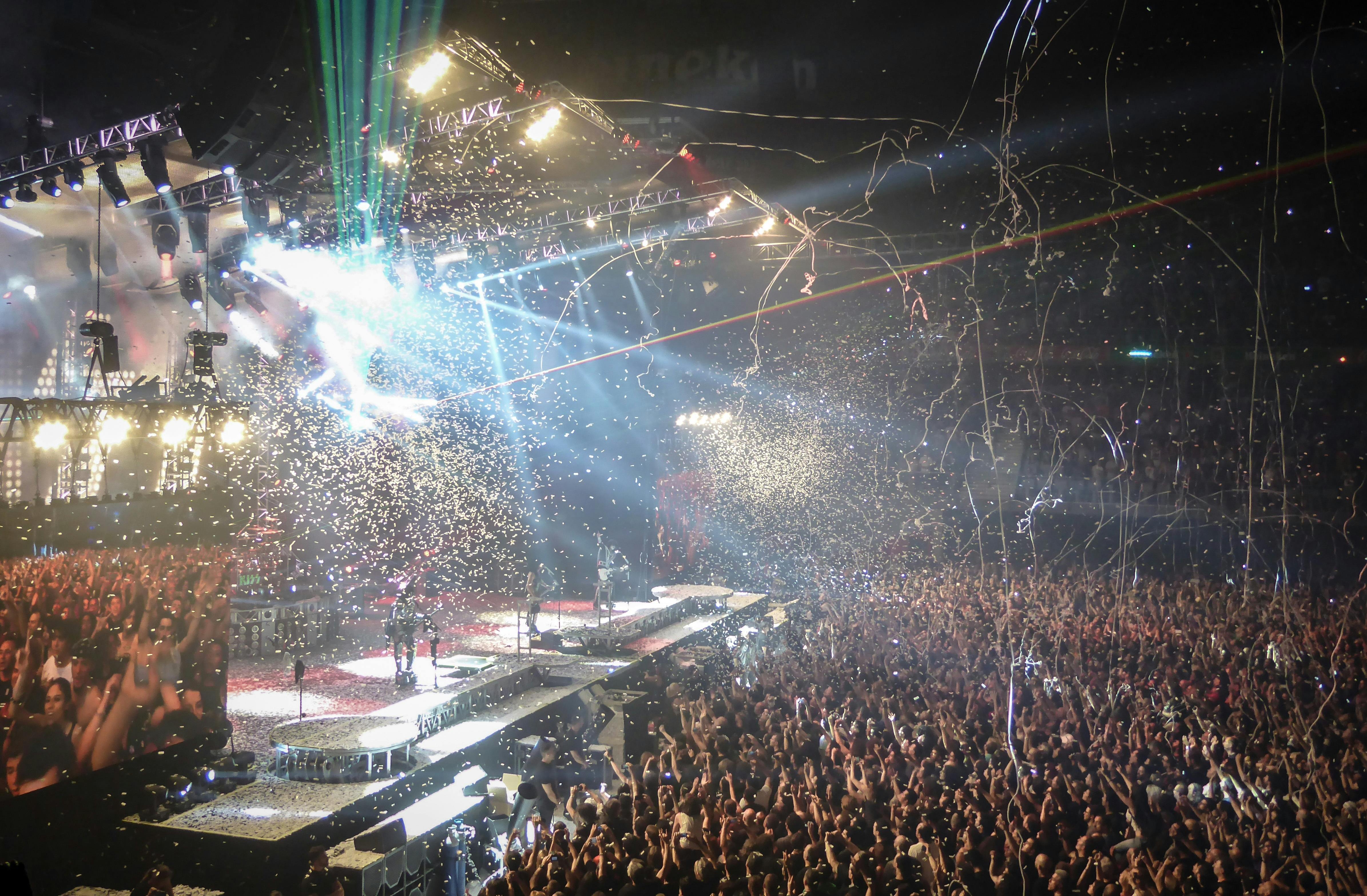
South Korea’s live-music story is no longer just about bigger crowds and higher grosses in Seoul. It is increasingly about geography. If pop concerts are now the fastest-growing part of the country’s performing-arts economy, the next policy question is where that growth happens. That is what makes the new support push for concerts outside the capital region worth watching: it treats regional live music less as a local side issue and more as part of national culture policy.
The market backdrop is strong enough to explain the urgency. The Ministry of Culture, Sports and Tourism said Korea’s performing-arts ticket sales reached KRW 1.7326 trillion in 2025, up 18.8 percent from a year earlier. Pop music was the biggest force in that expansion, with ticket sales rising 29.0 percent year over year to KRW 981.7 billion. The ministry linked that surge in part to a strong run of large-scale concerts with seating capacities above 10,000. In other words, live pop is not a marginal category right now. It is the main growth engine in the ticketed performance market.
But the same report shows why the state is now looking beyond Seoul. The capital area — Seoul, Gyeonggi-do and Incheon — still accounted for 76.4 percent of ticket bookings and 82.7 percent of ticket sales nationwide in 2025. Seoul’s own share of national ticket sales fell from 65.1 percent to 60.6 percent, while Gyeonggi-do and Incheon gained ground. Outside the capital area, Busan recorded KRW 101.7 billion in ticket sales and Daegu KRW 56.6 billion. That does not mean the regional market is suddenly balanced. It does mean officials now have hard evidence that demand and infrastructure can grow beyond Seoul if the right support is in place.
That is where the current concert-support program matters. KOCCA’s 2026 pop-concert production support call is already structured as a real industry mechanism rather than a symbolic regional gesture: applications ran from March 26 to April 14 through e-Naradoum, and applicants were asked to choose one bracket among large, medium or small concert categories. Even without reading the policy as a full decentralization plan, the signal is clear enough. The government wants regional pop concerts to be treated as scalable production activity, not just one-off events that happen to be held outside the capital.
This also lines up with the ministry’s broader policy language. In its business plan, MCST lists “promoting regional balanced development through culture” as a core objective, including support for local arts ecosystems and regional cultural facility hubs. Read alongside the live-market numbers, that makes the current approach easy to interpret: if pop music is already driving ticket growth, then one of the most direct ways to spread the benefits of that boom is to push more high-value live events into regional cities. That is not only a concert strategy. It is a cultural-infrastructure strategy.
For a culture desk, the useful takeaway is that the conversation has shifted. The old story was that K-pop proved Korea’s export power. The newer story is that live music is now being asked to do domestic development work too — building local audiences, justifying venue upgrades and making regional cities more competitive in the experience economy. Seoul is still the center of gravity. But current policy suggests the government would like the next phase of growth to leave a wider footprint.


Leave a Reply