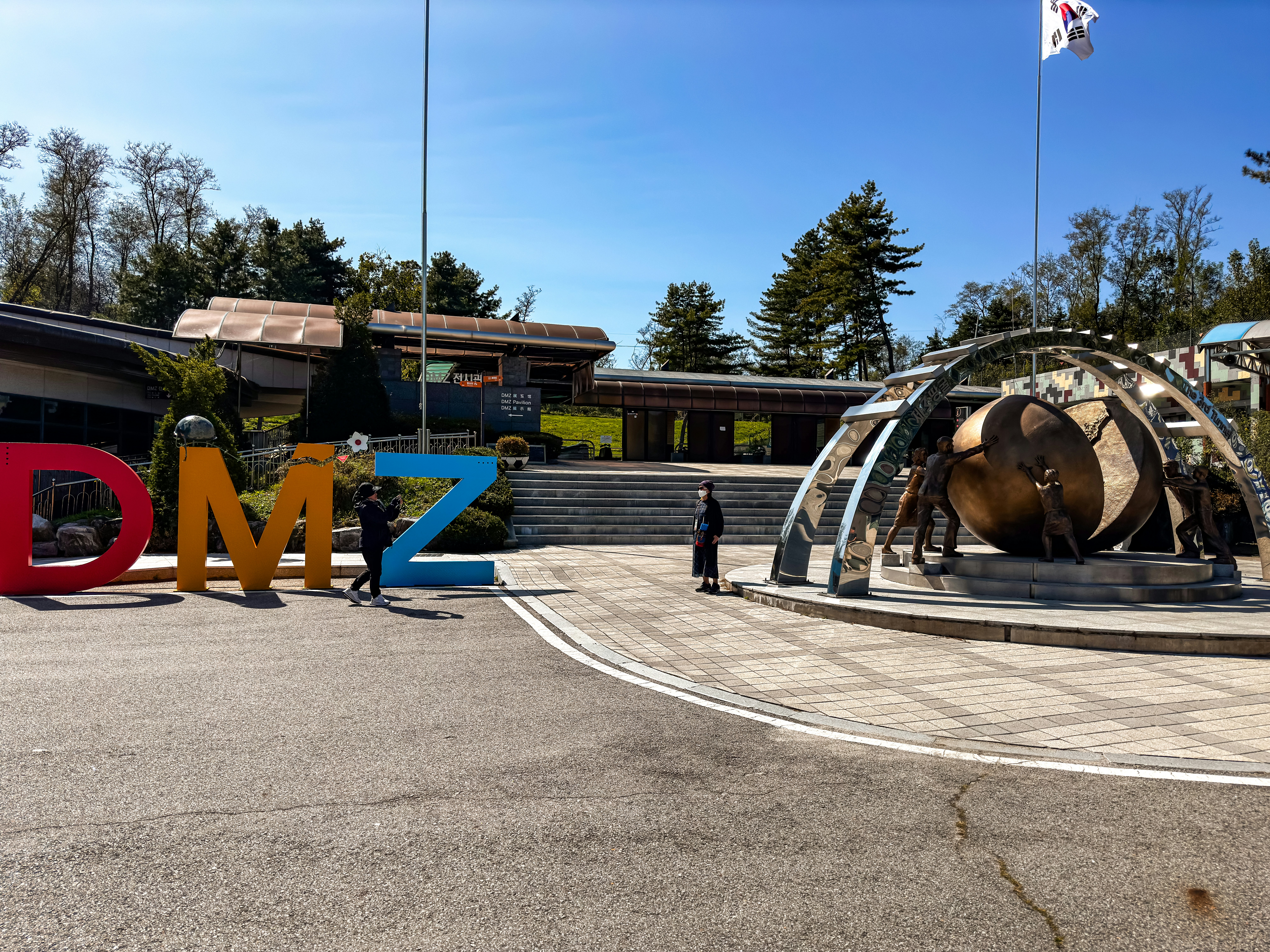
As all 12 DMZ Peace Trail routes return this month, South Korea is once again presenting the border not only as a security line, but as a place where war memory, protected ecology, and controlled tourism meet.
South Korea’s reopening of the DMZ Peace Trail is easy to read as a tourism update. It is that, but it is also something more revealing: a fresh reminder that the country continues to frame the border as a public space for interpretation. Beginning April 17, the government will fully reopen 12 themed Peace Trail routes across border areas in Incheon, Gyeonggi, and Gangwon, with the season running through November 30 and pausing during July and August because of peak summer heat.
What gives the reopening its weight is the way the trail packages three ideas at once. The routes are built not only around division and military tension, but also around ecology and regional heritage. Government materials describe the program as a way to experience the meaning of peace and security through the border region’s ecological, cultural, and historical resources, while Korean and English reporting alike stress that the trails are designed to let civilians encounter the Korean border as landscape, story, and system all at once.
That combination is what makes the DMZ so unusual in the Korean cultural imagination. The area remains one of the most heavily controlled borders in the world, but decades of restricted access have also left parts of the region ecologically distinctive. The Peace Trail turns that contradiction into a visitor experience. Rather than offering the DMZ only as a site of military confrontation, the program invites visitors to move through nearby zones where nature, memory, and state-managed interpretation overlap.
The current reopening covers 10 border localities: Ganghwa, Gimpo, Goyang, Paju, Yeoncheon, Cheorwon, Hwacheon, Yanggu, Inje, and Goseong. According to Yonhap, some sections allow walkers to approach fencing near the border under controlled conditions, with guides and staff accompanying participants, while the government says operating days and participant capacity on some routes will be expanded this year. The ambition is clear: this is not being treated as a symbolic reopening, but as a larger effort to develop the border area as a recognizable peace-and-ecology tourism asset.
Just as important is what this reopening does not mean. The announcement does not amount to an unrestricted opening of the DMZ interior. The Korea Times, citing the U.N. Command, reported that the 2026 program does not change the current rules governing activities inside the DMZ, which still require prior review, coordination, and authorization under the armistice system. That distinction matters. South Korea is reopening curated border trails, not dissolving the security architecture that defines the peninsula’s divided landscape.
For that reason, the Peace Trail works best as a story about framing. It puts history, ecology, and border tourism back in the same frame without pretending the tension has disappeared. Visitors are not being offered simple access to a peaceful natural reserve, nor are they being asked to consume the border only as a Cold War relic. Instead, they are being guided through a controlled experience in which the Korean War’s unresolved legacy, the region’s accidental environmental preservation, and the state’s tourism strategy all remain visible at the same time.
There is also a domestic angle worth noting. Participation remains limited to South Korean nationals, with identity verification required, and applications run through the official DMZ Peace Trail website and the Durunubi walking-travel app. In practice, that makes the reopening less a mass international tourism play than a structured national heritage experience: a way for South Koreans to visit the edge of division through a format that is scenic, supervised, and legible as public education.
For Korean-language verification and official travel context, the government’s Beautiful DMZ portal remains the main public hub for DMZ-related background information, travel content, and route guidance across the border region. That matters because the Peace Trail is not only a walking program; it sits inside a broader state effort to present the DMZ as both a historical wound and a civic landscape that can still be interpreted, visited, and narrated.




Leave a Reply