More than a campus party
Outside Korea, university festivals usually surface in English as lineup news: which idol group is performing, which campus drew the biggest crowd, which show sold out first. But Korean universities themselves describe something broader. Korea University traces its signature Seoktap Daedong Festival back to 1962 and says the first edition brought together students, faculty, alumni, parents, and the local community. The University of Seoul similarly defines its Daedongje as a spring festival where students, faculty, staff, and the local community gather to share culture and passion. That framing matters, because it shows that the Korean university festival was never meant to exist only inside the student bubble.
The campus becomes a pop-up cultural district
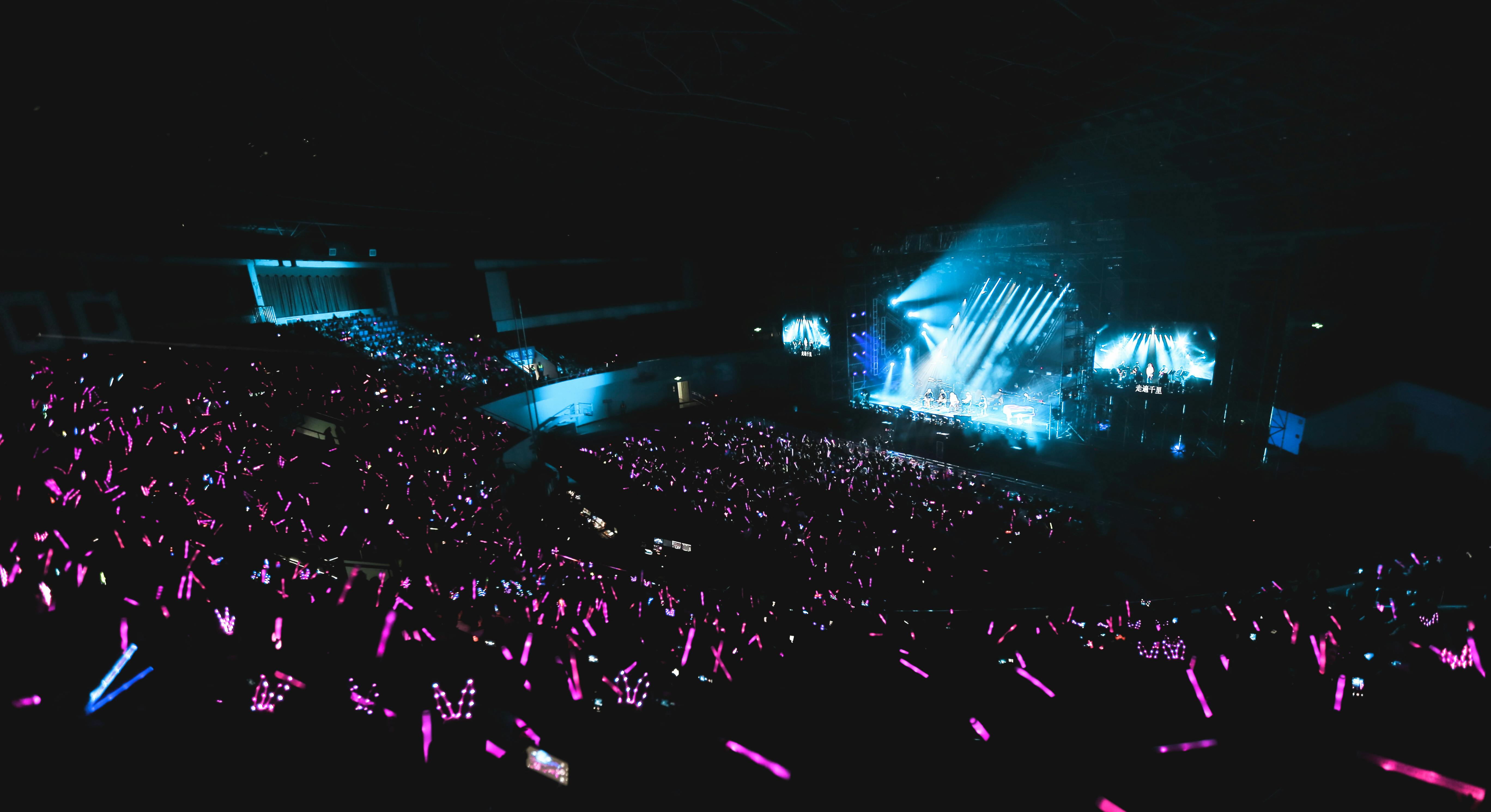
What these festivals offer also looks increasingly like a neighborhood-scale fair rather than a single-night concert. Yonsei University describes Daedongje as a three-day event built around band performances, exhibitions, sports competitions, bars, and mini-games run by departments and student groups. Seoul National University’s 2025 “Gwanak AMP UP,” billed as its first official campus rock festival, combined live band performances with event booths, student council programming, and food trucks. Kookmin University’s 2025 Bukak Daedong Festival featured club performances, a street zone, food trucks, and even a film festival. In practice, that mix turns the campus into a temporary cultural district: part concert venue, part student showcase, part food and street-event space.
Why the audience now reaches beyond students
The audience has expanded because the programming has expanded. Korea JoongAng Daily’s 2025 festival coverage shows campuses booking not only major K-pop names but also rock and indie acts such as Jannabi, wave to earth, Silica Gel, Band Nah, Car, the Garden, YB, and Lucy alongside idol groups. The same reporting notes that public interest has grown enough that many schools now explicitly separate students from nonstudent visitors, prioritizing safety and crowd control, while some campuses still allow outside visitors into designated areas or later-entry zones. That tension is revealing: universities are trying to preserve student ownership while managing events that clearly attract people far beyond the enrolled population.
A local economy forms around the festival
There is also a practical reason these festivals matter beyond campus life: they create short-lived local economies. Korea JoongAng Daily reported that student organizers negotiate with nearby restaurants and bars for festival-week promotions, rely on companies and stores near campus for sponsorship, and sometimes earn funding by letting sponsors operate promotional booths during festival periods. Universities outside Seoul, where large corporate sponsorship is harder to secure, have leaned even more directly on local partnerships; Kangwon National University, for example, worked with the Chuncheon Brewery Association on a traditional liquor tasting event that organizers said highlighted local identity while helping control costs. Seen this way, the university festival is not just a student leisure event. It is also a platform where neighborhood businesses, regional products, and local branding converge.
Why this matters in Korea right now
This broader role also fits a larger cultural-policy mood in Korea. In January, the Ministry of Culture, Sports and Tourism announced 27 “2026–2027 cultural tourism festivals,” saying selections reflected factors including expert, consumer, and resident evaluations, visitor-readiness, and competitiveness, while also aiming to connect global interest in K-culture to regional destinations beyond the Seoul metropolitan area. University festivals are not the same as government-designated tourism festivals, but they increasingly work according to a similar logic: culture is expected to generate movement, participation, and local visibility in specific places. That is why Korean university festivals deserve more serious attention than the annual question of who is headlining. They are becoming one of the clearest small-scale examples of how contemporary Korean culture travels through place, not just through screens.




Leave a Reply