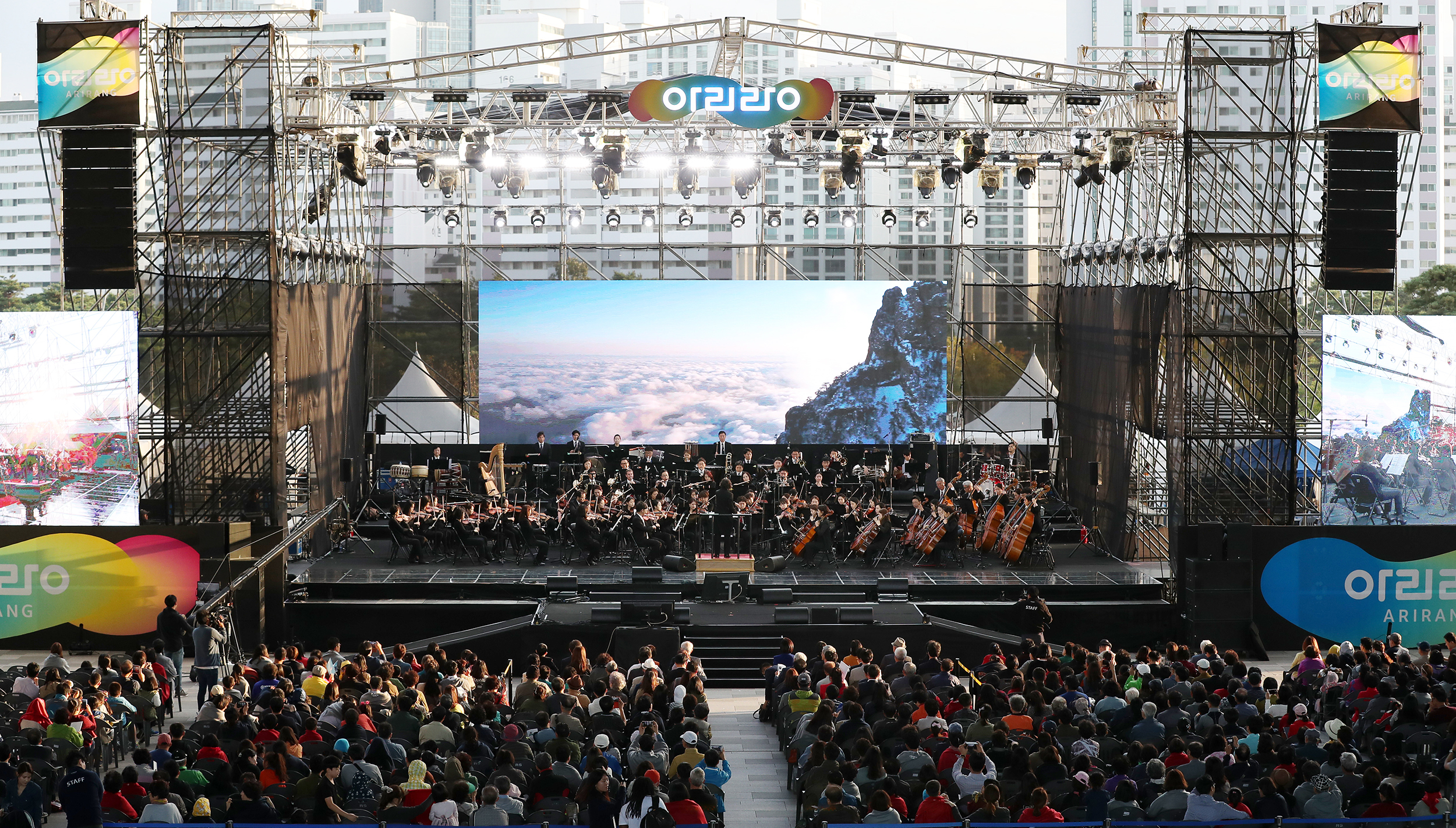
As BTS brings the name “Arirang” into a new pop-cultural moment, younger audiences are looking again at the song not as a distant relic, but as a living thread of Korean feeling, memory and belonging.
Some cultural symbols never really leave. They fade into the background for a while, become so familiar they are almost invisible, and then return at exactly the moment a new generation is ready to hear them differently.
That may be what is happening now with “Arirang.” For many younger Koreans, the song has long existed as something instantly recognizable but not always deeply examined — a melody associated with school, ceremony, or the broad category of “tradition.” But that distance seems to be narrowing. As social media posts, short explainers and online discussions revisit its meaning, “Arirang” is being encountered again not simply as a famous folk song, but as one of Korea’s deepest emotional languages.
BTS is one reason this moment feels newly timely. This month, the group introduced an upcoming album titled “Arirang,” and Korean media reported that the promotional animated video traces the folk song from a 19th-century phonograph to a modern stadium stage. According to Korea JoongAng Daily, BigHit Music said it hoped people unfamiliar with “Arirang” would look up the lyrics and connect with the stories and emotions attached to it. That makes “Arirang” more than a decorative reference point. It becomes a cultural doorway — one that younger audiences, and global fans, may now feel newly invited to walk through.
That is why “Arirang” is worth bringing up now. BTS did not create the song’s renewed significance, but they have helped create a fresh entry point into it. When one of the world’s biggest pop groups deliberately frames its comeback around “Arirang,” it signals that this is not only a heritage symbol to be respected from afar. It is also something still usable, still meaningful, still capable of carrying emotion into the present. That bridge between pop culture and cultural memory is precisely what makes the song resonate again for younger audiences.
Part of “Arirang’s” power lies in the fact that it was never just one fixed song. UNESCO describes it as a Korean folk-song tradition shaped through collective contributions over generations, with an estimated 3,600 variations across about sixty versions. The Academy of Korean Studies likewise describes it as a traditional folk repertoire transmitted orally and continually recreated, with famous regional lines such as Jeongseon, Miryang and Jindo Arirang representing only part of a much broader living tradition.
That openness matters. It means “Arirang” does not survive like a museum object, sealed behind glass. It survives because it has always moved — through regions, through voices, through changing lyrics, through different moments of Korean life. It can be intimate or ceremonial, mournful or proud, rooted in local tradition or reframed through contemporary culture. For younger listeners, that flexibility makes it easier to recognize that “Arirang” belongs not only to the past, but also to the present.
And what the song carries is not easy to reduce to one emotion. “Arirang” is often associated with sorrow, but that is only part of its meaning. UNESCO notes that the song tradition deals with broad human themes and invites improvisation and shared singing. The North Korean UNESCO entry similarly describes Arirang songs as speaking of leaving and reunion, sorrow, joy and happiness. Taken together, those descriptions help explain why the song still feels emotionally legible today: it does not express just grief, but the fuller texture of longing, tenderness, endurance and return.
That is also why younger audiences can meet “Arirang” through digital culture and still feel that it speaks to them. They may arrive through a BTS teaser, a comment thread, a short video explaining the lyrics, or an online post unpacking the song’s symbolism. But once they arrive, the discovery is often deeper than simple curiosity. “Arirang” begins to sound less like an assigned symbol of national culture and more like an inheritance of feeling — something that generations of Koreans have used to hold separation, grief, resilience and belonging in a shared form.
There is something quietly moving about that rediscovery. Younger people do not always reject tradition; often, they just need a path into it that feels emotionally accessible. “Arirang” has endured because it keeps offering that path. Each generation encounters it differently, but the thread remains. Older Koreans may hear memory and continuity first. Younger Koreans may hear explanation, surprise and sudden recognition. Yet both are still listening for the same thing: a familiar melody carrying a distinctly Korean way of turning private feeling into something communal.
In that sense, the renewed interest in “Arirang” is about more than one folk song resurfacing online. It is about what happens when a younger generation realizes that something it thought it already knew contains far more depth than expected. And in this moment, with BTS helping open the door, “Arirang” feels less like a lesson preserved in the past than like a companion waiting patiently in the present.
Photo: Arirang Festival 2016




Leave a Reply