A new nationwide survey and recent data from Gyeonggi Province suggest that violence against teachers in South Korea is not a string of isolated incidents but a structural problem—one that educators say existing protections still have not solved.
A fresh survey released on April 15 has sharpened a fear that has been building inside South Korean schools for years: for many teachers, violence and intimidation are no longer rare disruptions, but part of the job. In the survey, conducted by the Korean Federation of Teachers’ Associations with 3,551 teachers nationwide, 58.6 percent said they had either personally experienced violence from students or witnessed a colleague being targeted. The same survey found that 86 percent had experienced some form of classroom harassment, with 93 percent reporting lesson disruption or refusal to follow instructions, 87.5 percent verbal abuse, 80.6 percent threatening behavior, and 47.5 percent sexual harassment.
Those figures matter not only because they are high, but because they show how broad the problem has become. The issue is not limited to headline-grabbing physical attacks. It also includes a daily atmosphere of defiance, humiliation, verbal aggression, and threats that erode a teacher’s authority long before a case turns violent. The survey suggests that what teachers are describing is a continuum: classroom disorder, repeated harassment, and, in some cases, outright assault.
Recent reporting from Gyeonggi Province makes that argument harder to dismiss. According to data cited by local authorities, about 150 cases of physical assaults by students on teachers are reported there each year. Broader incidents involving students undermining teachers’ authority and the school system reached 1,213 in 2023, fell to 947 in 2024, and still totaled 442 in just the first half of 2025 across roughly 2,700 schools. Even if the year-to-year trend is uneven, the numbers point less to a solved problem than to a stubbornly recurring one.
The latest push for stronger protections was accelerated by a classroom attack in Gwangju, Gyeonggi, on March 31. Teachers’ groups said a middle school teacher was assaulted by a student, seriously injured, and taken to the emergency room. On April 9, the Korean Federation of Teachers’ Associations and its Gyeonggi branch publicly called for stronger legal measures, arguing that repeated violence against teachers can no longer be treated as a routine disciplinary issue. The case was referred to the regional teacher-rights protection committee and was scheduled for deliberation on April 20.
What gives the current debate particular force is the gap between prevalence and reporting. In the April 15 survey, only 13.9 percent of teachers said they had reported violent incidents to authorities. Among those who did not, 26.9 percent said reporting offered no practical solution, while 23.8 percent said they feared legal repercussions, including possible accusations of child abuse from parents. That finding helps explain why each new assault produces such intense anger among educators: the grievance is not only that violence occurs, but that many teachers believe the system leaves them exposed before, during, and after it happens.
That frustration also helps explain why teachers’ groups are focusing on records and accountability. Their argument is that serious violations against teachers—especially assault and injury—should leave a formal trace in the student disciplinary system, rather than disappearing into a closed internal process. In public statements after the Gyeonggi attack, they called for stronger legal standards and for serious infringements on teachers’ rights to be documented in student records. Whether or not lawmakers accept that specific demand, it shows how far the debate has shifted: from appeals for respect toward demands for enforceable consequences.
There is also evidence that the broader pressure on teachers has not eased. According to National Assembly Library data cited by the Korea JoongAng Daily, cases involving injury, assault, and sexual violence against teachers rose from a daily average of 3.5 in the spring semester of 2024 to 4.1 in the spring semester of 2025. That increase does not, by itself, explain the entire crisis, but it reinforces the sense among teachers that promised reforms after earlier public outcry have not fully changed classroom realities.
For South Korea, this is no longer only an education-policy story. It is a society story about what happens when institutional authority weakens faster than replacement norms are built. Over the past several years, public debate has often framed schools through the language of student rights, child protection, and anti-abuse safeguards. Those concerns remain important. But the latest teacher survey suggests that, in practice, many educators feel the balance has tilted toward a system where intervention is risky, reporting feels futile, and even serious misconduct may carry limited consequences.
The most important point in the new data is not simply that violence exists in schools. It is that a majority of surveyed teachers now say they have encountered it directly or indirectly, while many also believe the formal response system is too weak to trust. That combination—normalization of abuse and loss of faith in remedy—is what turns a series of incidents into a structural warning. South Korea’s education system has long relied on the assumption that the classroom can function through shared legitimacy. The latest numbers suggest that legitimacy is under strain, and teachers are now asking the state to rebuild it with something stronger than reassurance.
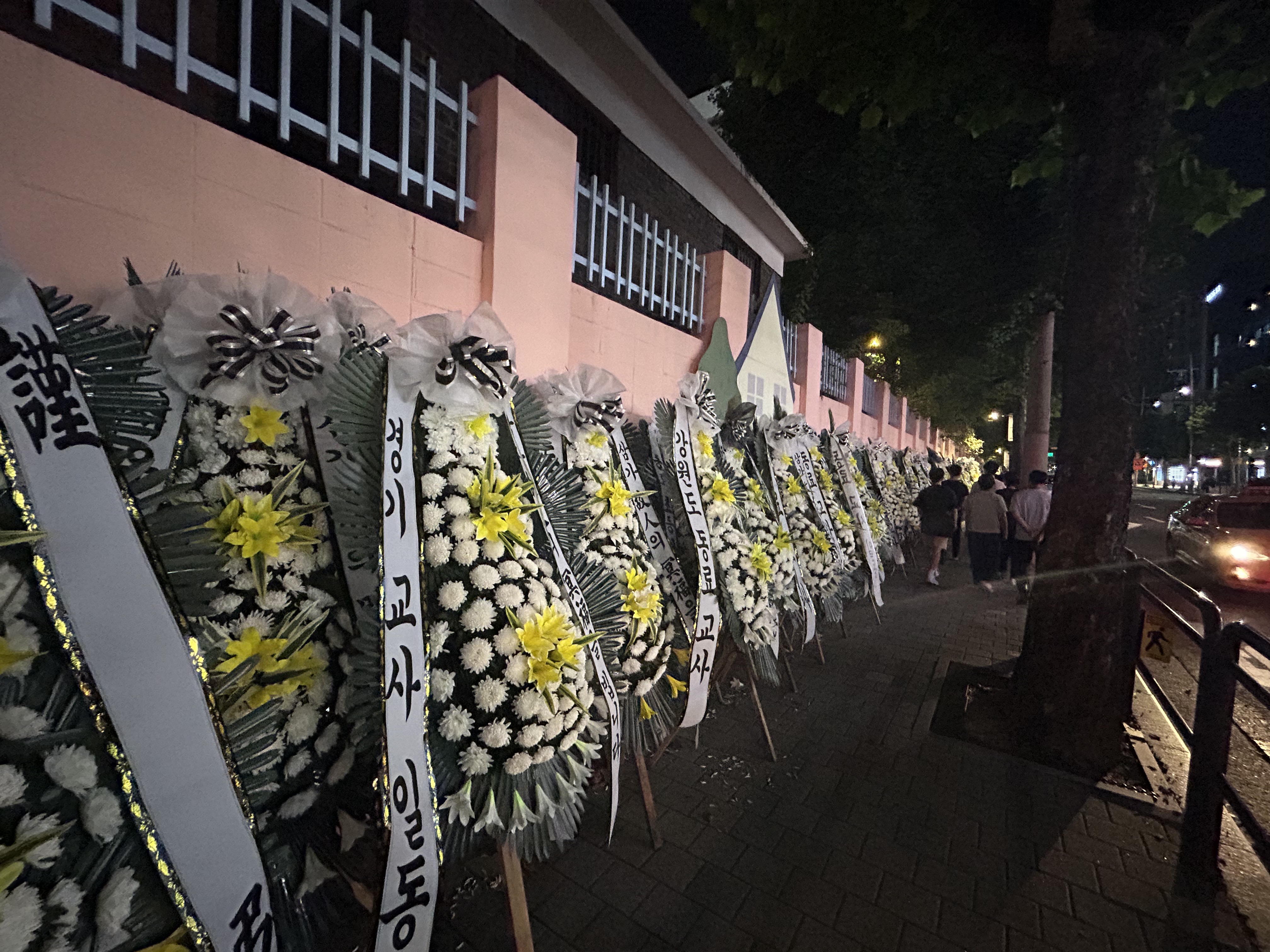
Photo: Altostratus, Commemorating the Suicide Case of a Teacher at Seoi Elementary School, Wikimedia Commons, CC BY 4.0.



Leave a Reply