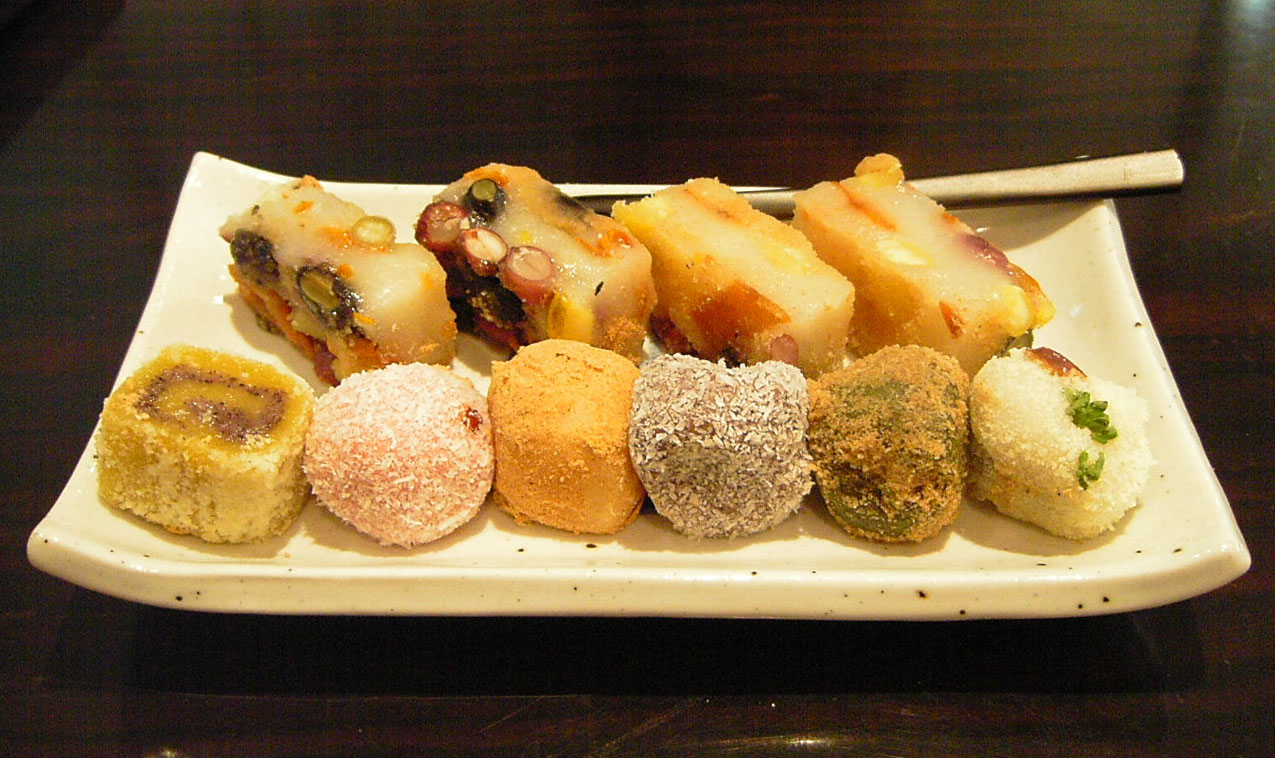
A once-niche dessert is breaking into the mainstream as TikTok and Instagram turn chewy, buttery rice cakes into the country’s newest must-try snack. In Korea’s fast-moving food economy, the real story is not just what people are eating, but how quickly online fascination becomes offline demand.
In South Korea, the next big snack craze often arrives with a recognizable rhythm: a photogenic product, a burst of influencer attention, long lines in trend-setting neighborhoods, and then a flood of copycats racing to catch up. Butter rice cakes appear to be the latest entrant in that cycle. The Korea Times reported this week that “butter rice cakes,” also referred to as butter mochi or butter tteok, are drawing lines at bakeries across Korea after gaining traction on social media.
What makes the treat work in the attention economy is easy to see. Butter rice cakes promise the kind of textural contrast that performs well online: crisp on the outside, chewy at the center, rich with butter but still anchored by the familiar elasticity of glutinous rice flour. According to The Korea Times, recipes vary, but the core profile remains consistent across shops, with butter providing a savory depth that separates the dessert from more conventional rice cake offerings.
That combination matters because Korean viral food trends rarely spread on taste alone. They spread because they can be filmed, posted, compared, and chased. A broader analysis of Korea’s recent food-fad ecosystem points to a repeatable pattern driven by social media amplification, scarcity, and fear of missing out. One recent trend study on Korea’s snack cycles argues that TikTok and Instagram can push demand “almost overnight,” especially when limited availability makes participation feel time-sensitive and socially visible.
Butter rice cakes fit neatly into that template. The Korea Times notes that bakeries in Seoul hotspots such as Seongsu and Hongdae are already selling the dessert, with individual pieces priced around 2,000 won to 3,000 won. That price point is important: it keeps the product accessible enough for impulse purchases while preserving the aura of a small luxury, the kind of affordable indulgence that thrives in Korea’s cafe and bakery culture.
For KLitReads readers, the larger significance is not simply that butter rice cakes are trending. It is that Korea has built one of the most efficient food-virality systems anywhere. Dense urban neighborhoods, highly networked consumers, and a culture of rapid trend participation allow obscure or niche items to scale with unusual speed. Recent commentary on Korean snack fads points to earlier examples such as Honey Butter Chip, tanghulu, and the Dubai chewy cookie as evidence that digital hype can translate directly into in-store sellouts, long queues, and fast commercial imitation.
That makes butter rice cakes more than a dessert story. It is also a case study in how contemporary Korean consumption works. A product no longer needs mass-market distribution to become nationally visible. It needs aesthetic clarity, social proof, and a format that can move fluidly between bakery counters and phone screens. Once that happens, offline retail behaves less like traditional discovery and more like a live-action extension of the feed.
The risk, of course, is that virality and staying power are not the same thing. Korea’s food trend history shows that some products graduate from fad to fixture, while others burn hot and disappear once oversupply kills novelty. Analysts of Korea’s viral snack market describe a familiar lifecycle of rapid rise, saturation, and decline, with only a small number of products making the transition into durable consumer staples.
So the real question around butter rice cakes is not whether they are popular right now. They are. The more interesting question is whether they can survive the phase that comes next: cloning, oversaturation, and the inevitable search for the next algorithm-friendly bite. For the moment, though, butter rice cakes have achieved the one thing every Korean snack brand wants—being seen, shared, and lined up for.
And in Korea’s trend economy, that may be the most valuable ingredient of all.
Photo by Takoradee, via Wikimedia Commons, licensed under CC BY-SA 3.0.


Leave a Reply