On some winter nights, politics feels like theater. On Dec. 3, 2024, it stopped feeling like that.
When then-President Yoon Suk Yeol declared emergency martial law and sent troops toward the National Assembly, the country watched a scene it had spent decades teaching itself would never return. The order lasted only hours, but the civic and legal aftershocks stretched into years — culminating on Feb. 19, 2026, when the Seoul Central District Court convicted Yoon of leading an insurrection and sentenced him to life in prison.
This isn’t a breaking-news story. It’s about what happens when a democracy survives an attempted rupture — and then has to live through the slower, messier phase of judgment.
A short night, a fast crowd
The first striking feature of that night wasn’t what the state tried to do. It was how quickly ordinary people treated it as a personal emergency.
Protests didn’t “build.” They materialized at the National Assembly and across major cities, as citizens interpreted martial law not as a policy dispute but as a breach in the rules of political life. Candlelight gatherings returned almost immediately, echoing South Korea’s mass-mobilization tradition.
From outrage to procedure: when the courtroom becomes the second square
Once the immediate danger passed, the crisis entered the stage democracies often struggle with: turning mass emotion into institutional consequence without letting vengeance replace law.
Prosecutors argued the martial-law bid was an illegal attempt to seize the legislature, arrest political opponents, and create unchecked executive power. The court agreed, describing the deployment of military and police forces as rebellion/insurrection, and emphasizing the social damage and Yoon’s posture throughout proceedings.
The people split — and stayed split
If you only read the verdict, you might expect closure. Instead, the country again showed a split-screen reaction: opponents celebrating accountability, supporters denouncing politicized justice, both crowds turning the courthouse perimeter into a referendum on legitimacy.
Celebration and fury coexisted: some hailed the ruling as democratic accountability, while calls for the harshest punishment — including the death penalty, which prosecutors had sought — circulated among hardline voices who viewed the episode as an unforgivable assault on the constitution.
This divide didn’t appear at the end; it hardened early and never softened. The longer the process ran, the more “the trial” became a proxy battle over trust itself: trust in courts, in the opposition, in the meaning of the constitution.
The Nobel idea: moving the protagonist from Yoon to the public
The most politically interesting rhetorical move since the crisis has been an effort to retell the story with a different main character: the citizens.
On the first anniversary of the martial-law episode, President Lee Jae Myung publicly said South Koreans who resisted the attempt were worthy of a Nobel Peace Prize — a symbolic pivot from punishing one man to praising a civic reflex.
“Fair” or “corrupt”? Why the legitimacy fight doesn’t end with sentencing
A core problem for South Korea now is that a significant minority does not treat the judiciary as a neutral referee. That skepticism has been fueled by a wider political campaign of insinuations about “biased” courts — and by periodic allegations involving judges that deepen distrust even when unproven.
Polling around the impeachment era captured this fracture: roughly half expressing trust in the Constitutional Court and a large minority expressing distrust — a warning that even correct procedure won’t automatically persuade those who think the institution itself is compromised.
What the president and the parties are saying
Democratic Party (ruling): DP leader Jung Chung-rae expressed regret the court did not impose death, calling the life sentence evidence of a “lack of a sense of justice.”
People Power Party (main conservative opposition, Yoon’s former party): PPP floor leader Song Eon-seok issued a public apology, saying the party feels a “deep sense of responsibility” for the disruption.
But the broader conservative bloc is visibly divided — with some figures urging a clean break from Yoon, and others still courting his most loyal supporters.
President Lee / presidential office: On the day prosecutors sought the death penalty, Lee’s office said it expected the judiciary to rule “in accordance with the law, principles, and public standards.”
What happens next in court
1) Appeal is coming.
Yoon’s lawyers have already signaled they will appeal, arguing the case was politically predetermined.
2) The path is a three-tier system.
Because this was a panel decision at the Seoul Central District Court, the next stop is the Seoul High Court, and then (if pursued) the Supreme Court.
3) He stays in custody, and other cases continue.
Yoon has been detained since July 2025 and still faces multiple additional criminal trials connected to the martial-law episode and other allegations, meaning even a successful partial appeal wouldn’t necessarily end his legal exposure.
4) The “pardon politics” question will hover.
South Korea’s modern pattern — imprisoned ex-presidents eventually receiving pardons or political rehabilitation — is now part of the public debate again, especially as both parties game out future elections and coalition math.
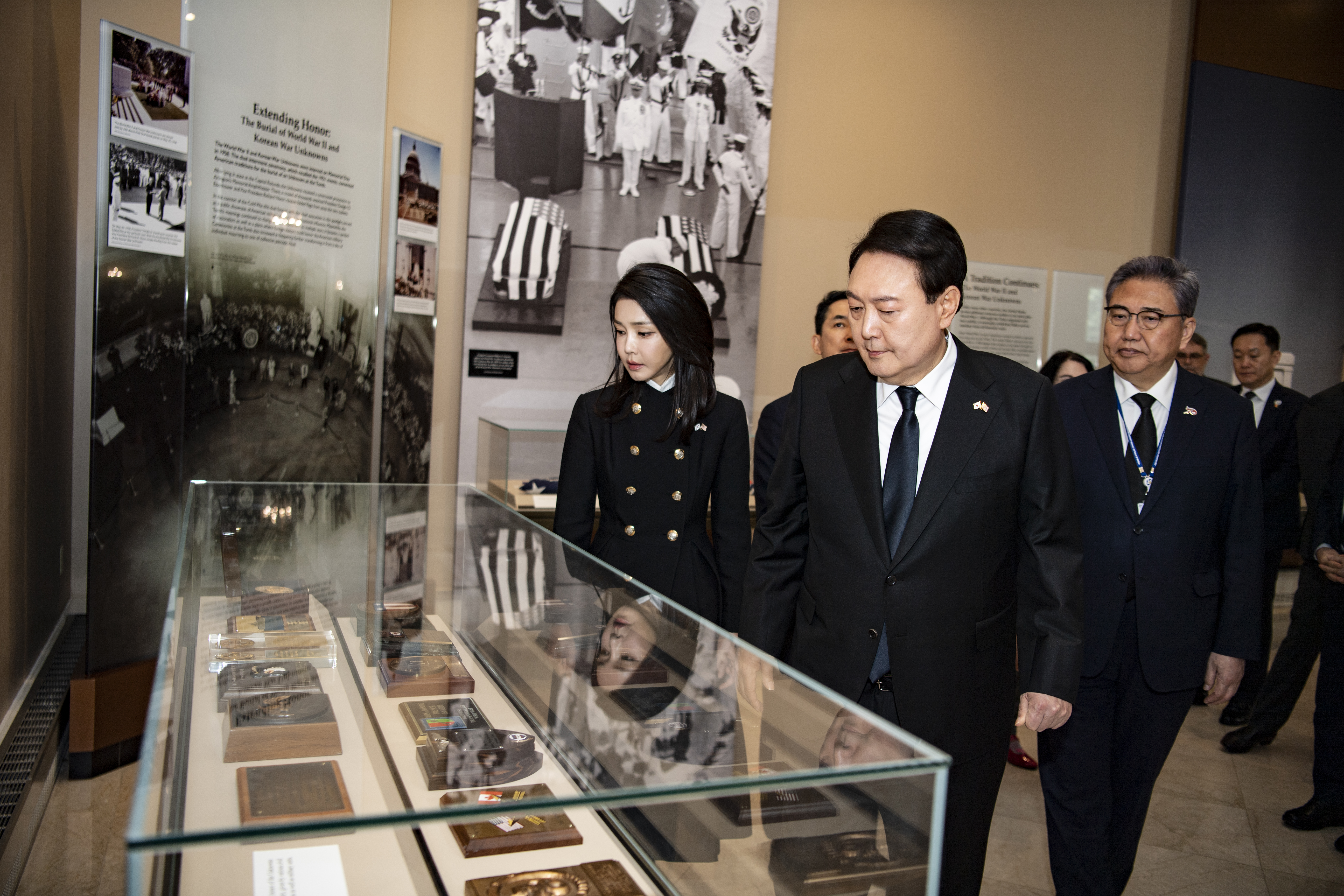
Photo: Arlington National Cemetery (U.S. Army photo by Elizabeth Fraser), via Wikimedia Commons, Public Domain.



Leave a Reply