Every winter, this argument returns right on schedule: Is it Chinese New Year or Lunar New Year? People pick sides, talk past each other, and somehow the same basic point gets lost again: the fight isn’t about being “politically correct.” It’s about being correct.
If you mean China, say China.
If you mean the wider holiday season across multiple cultures, stop using one country as the default label.
That’s the whole issue. And it’s not hard.
The calendar is shared. The cultures are not.
Let’s clear up one technical thing so nobody can use it as a gotcha: the system behind these New Year celebrations is lunisolar—months follow the moon, but the calendar is adjusted to stay aligned with the seasons. So yes, “lunar” is shorthand.
But here’s what matters: a shared timing system doesn’t erase cultural boundaries. Lots of countries use the Gregorian calendar; that doesn’t make every December holiday “American Christmas.”
“Chinese New Year” turns into an eponym—and that’s the problem
Chinese New Year is globally visible for good reasons: China’s cultural influence, huge diasporas, major media coverage, and the scale of celebration. None of that is up for debate.
What is up for debate is what happens next: English speakers start using “Chinese New Year” as the umbrella term for everything in the same season—Korean, Vietnamese, multicultural school events, workplace greetings, pan-Asian festivals.
That’s not “just semantics.” It’s an eponym. It’s like calling every adhesive bandage a Band-Aid. Convenient, common—and wrong when you’re trying to be precise.
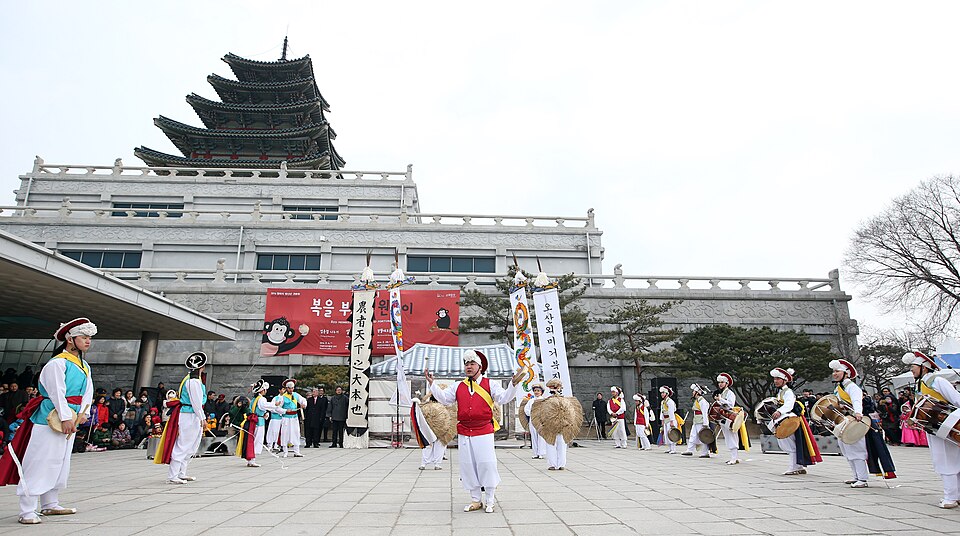
Koreans celebrate Seollal. Vietnamese celebrate Tết. These are not Chinese New Year “variants.” They come with their own foods, rituals, family structures, languages, and emotional meanings. When “Chinese New Year” becomes the default label, those differences become “extras,” and people from those cultures get treated like they’re borrowing someone else’s holiday.
“Lunar New Year” isn’t anti-Chinese. It’s pro-accuracy.
This is where the debate gets dumb: some people hear “Use Lunar New Year” and translate it as “Stop saying Chinese.” No. That’s not what anyone reasonable is saying.
Use Chinese New Year (or Spring Festival) when you’re talking about Chinese traditions or Chinese communities.
Use Lunar New Year when you’re talking about the broader season, mixed communities, or multiple cultures.
Use Seollal / Tết when you can be specific—because specificity is respect and clarity.
That’s it. It’s the same logic we already use everywhere else. When a workplace says “Happy holidays,” it’s not attacking Christmas. It’s acknowledging the room.
The point is recognition, not perfection
Is “Lunar New Year” astronomically perfect? No. “Lunisolar New Year” would be cleaner, and almost nobody is going to say that outside a classroom.
Language isn’t a science test. In public English, the goal is simple: choose the term that communicates what you actually mean without erasing people.
“Lunar New Year” does something quietly important: it signals—right away—that this isn’t owned by one nation’s name. It tells a Korean kid bringing tteokguk to school, or a Vietnamese family preparing bánh chưng, that they’re not guests at someone else’s celebration.
Here’s the rule. Use it and move on.
If you’re writing, teaching, hosting, or announcing:
- Chinese New Year = you mean Chinese customs/communities
- Lunar New Year = you mean the broader season or multiple cultures
- Seollal / Tết / Spring Festival = you can be specific, so be specific
That closes 95% of the “debate” instantly.
Because the real problem was never that people say “Chinese New Year.” The problem is when they say it by default—when what they actually mean is broader, more diverse, and shared.
And if your language keeps telling millions of people that their New Year is “basically Chinese,” then no, it’s not “just a name.”
It’s a message.
And we can retire it.
Korea.net / Korean Culture and Information Service



Leave a Reply