
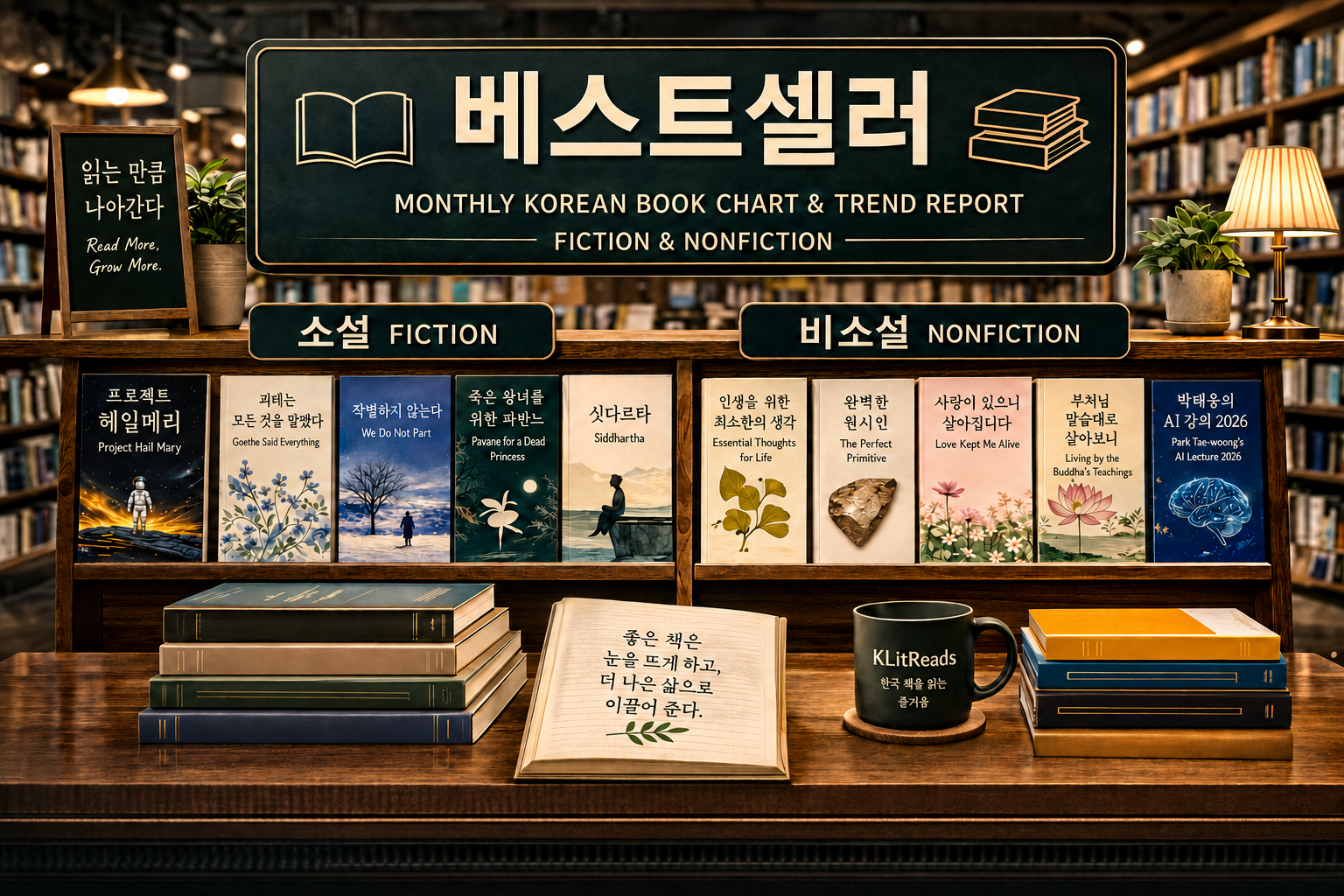
Walk into a major bookstore in Seoul and the signal is hard to miss: slim essay collections, “healing” reflections, and compact literary nonfiction increasingly occupy the tables that once belonged almost exclusively to long novels or heavyweight humanities. Observers of Korea’s book market say the appetite for short-form, quote-friendly writing is expanding again—showing up in bestseller rankings, online book discussions, and even the way retailers curate shelves.
This isn’t simply a “people read less” story. It’s more specific: many readers appear to be choosing shorter, modular books—especially essays—because they fit the rhythms of contemporary attention, social media sharing, and daily commuting better than longer-form reading.
Why essays fit the moment
Several forces are converging:
- Time-fragmented reading habits. Essay collections are built for interrupted schedules. One piece can be finished in a subway ride, over coffee, or between work messages, without the narrative re-entry demands of a novel.
- A culture of quotability. Short-form essays thrive in a screenshot-and-share ecosystem. A paragraph that “lands” can circulate on Instagram or in chat apps as easily as a song lyric—turning reading into a social signal as much as a private act.
- Comfort reading and “healing” sensibilities. International reporting has traced Korea’s sustained popularity of “healing essays” to books that foreground reassurance, relatability, and a conversational tone—often with short chapters designed to be consumed in small portions.
That last category matters because it links essay popularity to Korea’s broader self-care discourse. The genre’s appeal is frequently described less as literary prestige and more as emotional utility: readers don’t have to commit to a long interpretive project; they can pick up immediate resonance.
“Text-hip” and reading as an identity marker
Alongside comfort reading is another, almost opposite, driver: reading as taste performance. Campus and youth-culture coverage has described the rise of “text-hip” among MZ readers—treating books as lifestyle objects and reading as a curated identity. In this frame, an essay collection isn’t only easy to finish; it’s also easy to display, recommend, and fold into a personal aesthetic.
This helps explain why short essay titles can move rapidly through peer networks: they’re legible cultural tokens. You don’t need weeks of reading to participate in the conversation. You can join after one memorable line.
The market mechanics: what retailers and publishers see
Industry-facing summaries from Korea’s publishing export portal have repeatedly emphasized that reader demand is shifting, especially among younger cohorts, and that publishers are actively adjusting format and marketing strategies to match new discovery paths.
Retail behavior reflects this adjustment. When books are consumed more like “episodes” than “projects,” front-table merchandising and fast reprint cycles become more important than long tail catalog building. Essay collections benefit because they are:
- low-friction purchases (often cheaper than hardcovers or large-format nonfiction),
- giftable, and
- responsive to trends (a topic can be packaged quickly into a collection).
In other words, essays don’t just align with reading behavior—they align with retail incentives.
Celebrity gravity amplifies short-form titles
Even when the core trend is grassroots, entertainment influence can turn it into a spike. Korea has recently seen books jump charts after being mentioned by idols or actors, and short-form nonfiction is particularly “spike-ready” because it’s approachable for first-time buyers. Reporting on celebrity-driven reading surges shows how quickly a single title can climb major retailer lists after a public mention.
That dynamic doesn’t create the essay trend by itself, but it rewards the formats that convert fastest—and essay collections usually convert faster than dense, specialist nonfiction.
Price sensitivity and the “used bookstore” layer
A quieter accelerant is cost. As book prices rise, some Korean reporting has noted renewed interest in used bookstores among MZ readers—driven by a mix of affordability and the “text-hip” idea of bookstores as discovery spaces.
Essay collections fit this channel well: they’re easy to browse, easy to sample, and often purchased impulsively. In a used-book environment, short titles also reduce the risk of buyer’s remorse.
A prestige parallel: even major authors lean into shorter collections
Interestingly, the short-form pull isn’t confined to mass-market “healing” titles. When Nobel laureate Han Kang released a book built around her Nobel lecture plus additional pieces, it reportedly sold in large numbers immediately online—another example of how collections and shorter texts can behave like “events” in today’s market.
This doesn’t mean long novels are disappearing—Korean fiction remains a major market force. But it does suggest that the collection format (lecture, essay, brief prose) now has a commercial logic that can compete with longer works, even at the high-prestige end.
What to watch next
If the essay boom continues, expect three downstream effects:
- More hybrid formats: essay + illustration, micro-essays, diary-like nonfiction, and themed “small chapters” designed for mobile-era reading.
- Retail curation to tighten: bookstores will likely segment essay tables by mood (comfort, relationships, work burnout) rather than by literary category.
- A debate over depth vs. velocity: the same qualities that make essays shareable—brevity, immediacy—can trigger criticism that the market is rewarding speed over substance. That tension is already visible in overseas coverage of Korea’s “healing essay” dominance.
For now, the takeaway is straightforward: essay collections are rising not because Koreans stopped caring about books, but because a growing number of readers want books that behave more like modern life—portable, punctuated, and instantly discussable.


Leave a Reply