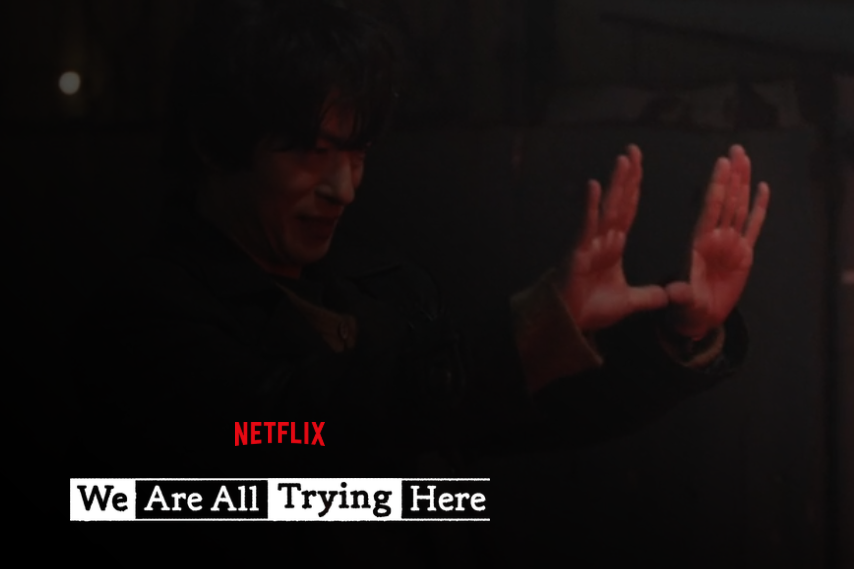
We Are All Trying Here is becoming one of 2026’s more complicated K-drama conversations. The ratings have remained modest, hovering near the 2% range, but the drama continues to spark discussion online because viewers are split over one central question: is it emotionally powerful, or simply too exhausting?
The series comes from Park Hae-young, the writer behind My Mister and My Liberation Notes. That alone raised expectations. Park is known for slow, introspective dramas about loneliness, failure, and the quiet ways people try to survive ordinary life. But with We Are All Trying Here, that emotional realism may be testing viewers more than comforting them.
The drama stars Koo Kyo-hwan as Hwang Dong-man, an aspiring filmmaker who has spent 20 years trying to make his debut. While his peers move forward in their careers, he remains stuck, consumed by shame, envy, and frustration. Go Youn-jung plays Byeon Eun-a, a film company producer facing her own emotional exhaustion.
That premise explains why the drama is resonating with some viewers and alienating others. This is not light weekend viewing. It is not a glossy romance, a revenge thriller, or an easy comfort drama. It asks viewers to sit with characters who feel bitter, defeated, and painfully aware of their own perceived failures.
That may be the problem. Weekend dramas often work best when they offer escape, warmth, or fast-moving catharsis. We Are All Trying Here offers something heavier: recognition. For viewers who connect with Park Hae-young’s style, that can feel deeply moving. For others, it may feel like emotional homework.
Still, the ratings do not tell the whole story. The drama has shown signs of gradual improvement, and it has also drawn attention through streaming, including Netflix Korea. That suggests We Are All Trying Here may be struggling as a traditional broadcast drama while still finding a more selective audience online.
The debate around the show reflects a larger shift in how K-drama success is measured. A drama can underperform on television but still become a meaningful conversation piece through streaming platforms, social media, and online communities. We Are All Trying Here appears to sit in that middle space: not a mainstream hit, but not ignored either.
It also shows the limits of prestige writing in today’s drama market. Park Hae-young’s dramas often appeal to viewers who appreciate quiet emotional detail, realistic dialogue, and flawed characters. But those same qualities can make a series feel slow, bleak, or inaccessible to audiences looking for entertainment after a long week.
That is why We Are All Trying Here is such a divisive watch. Its central theme is not just failure, but the shame of feeling left behind. Dong-man is not an easy underdog. He is resentful, insecure, and often uncomfortable to watch. But for some viewers, that discomfort is exactly what makes him feel real.
The question now is whether the drama can expand beyond its loyal niche. If the second half delivers emotional payoff, it may be remembered as another quietly powerful Park Hae-young work. If not, it may remain a drama admired by a small group but avoided by viewers who found it too heavy.
For now, We Are All Trying Here is fighting more than low ratings. It is fighting the modern viewer’s limited patience for slow, emotionally demanding storytelling. Whether that makes it misunderstood or simply too difficult for a broad audience may become clearer as the series continues.




Leave a Reply