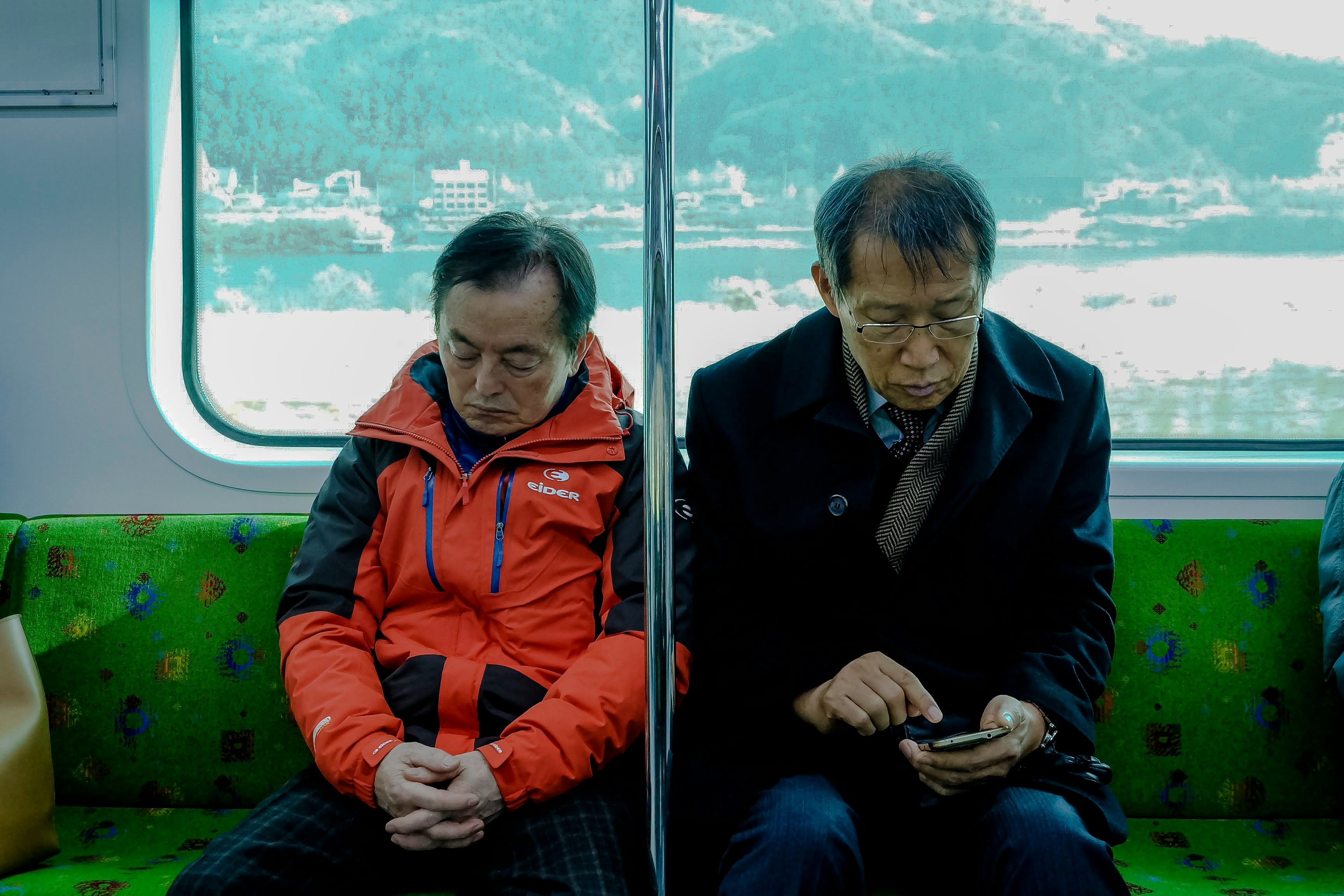
A long-running argument over senior free subway rides in South Korea has flared up again after President Lee Jae-myung said on March 24, 2026 that the government should study whether older riders’ free access to public transportation should be limited during peak commuting hours. His comments were framed around rush-hour crowding and the concentration of demand during commute windows, not around abolishing the benefit outright.
That distinction matters. In Seoul today, residents aged 65 and older can use a senior transit card to ride a wide range of capital-region subway lines for free, while buses, GTX lines, and the express airport railroad still require payment. Seoul’s own guidance also shows how entrenched the system has become: it is not an emergency subsidy but part of the everyday structure of urban mobility for older residents.
The pressure to revisit the system is coming from demographics and finance at the same time. Seoul Metro’s 2024 provisional figures showed free-ride losses of 413.5 billion won, up from 264.2 billion won in 2020, while total net losses approached 694.7 billion won. Nationally, the six major urban rail operators reported 775.4 billion won in free-transport losses in 2024, the second straight year above 700 billion won, with cumulative deficits around 29 trillion won. In Daegu alone, free-ride losses reached a record 68.1 billion won in 2024, up about 22 percent from the year before.
That is why the argument for change is increasingly being framed in the language of fairness and system capacity. The president’s own remarks were explicitly about crowding during peak hours. A March 2025 Seoul survey presented at a city council forum found that 64 percent of respondents supported raising the eligibility age, with the most common reasons being the burden on future generations, changing social norms around aging, and the sense that subway benefits are uneven because some cities do not even have subway systems.
But the case for keeping the benefit is not just emotional or symbolic. In that same Seoul survey, the biggest reason people opposed tightening eligibility was simple: transport costs still matter for economically struggling older people. That concern is backed by broader social data. Statistics Korea’s 2023 Statistics on the Aged reported a relative poverty rate of 39.3 percent for people aged 66 and over in 2021, and the benefit itself has long been described as a social welfare measure meant to reduce seniors’ economic burden and protect freedom of movement.
This is also why the debate is often misread when it is reduced to “young versus old.” The deeper problem is institutional. The current system is rooted in national welfare logic, but city rail operators and local governments carry much of the financial strain. In recent remarks, officials again pointed to that mismatch, arguing that a policy created by central law has effectively become a local fiscal burden. Urban rail operators have likewise demanded national reimbursement, saying the system has reached its financial limits. Daegu reporting has also underscored the contrast many local operators point to: Korail receives government reimbursement for legally mandated free rides, while city subway systems generally do not.
That mismatch helps explain why simple age hikes keep resurfacing politically: they are visible, easy to communicate, and they seem tougher than tax-funded reimbursement. But they may not be the most thoughtful fix. A recent Korea Transport Institute study, as reported by Maeil Business, suggested that means-testing could cut projected Seoul subway free-ride costs more than merely lifting the eligibility age. The study estimated that limiting full exemption to seniors in the bottom 70 percent by income would reduce projected 2030 costs by 71.7 percent, a larger reduction than raising the age threshold to 70 or 75. Meanwhile, Daegu has already moved toward a step-by-step age increase by 2028, showing that local governments are actively testing redesign rather than waiting for a national solution.
So what exactly is Korea arguing about now? Not only whether older people should ride for free, but what kind of policy the benefit is supposed to be. If it is a universal mobility right attached to old age, then the state should fund it more honestly. If it is anti-poverty welfare, then income-based targeting becomes harder to avoid. And if the main concern is rush-hour congestion, then time-based limits may relieve crowding without fully dismantling the benefit. The current controversy is less about one subway fare than about how Korea wants to distribute the costs of aging in a super-aged society.


Leave a Reply