
In South Korea, the bookstore date is becoming a quiet alternative to the café date. The appeal is obvious: atmosphere, slower conversation, and a sense of taste. But the trend also exposes a familiar urban tension over money, seating, and what public spaces are actually for.
South Korea’s “bookstore date” trend is not really about books alone. It is about what kind of time young people are trying to buy for themselves, and what kind of public mood they want to enter together. In online discussions, bookstores are described as quieter, calmer alternatives to cafés: places where a date can unfold without the pressure to keep talking, keep ordering, or keep performing. That makes sense in a country where overall adult reading remains weak, but younger adults still stand out. The Ministry of Culture’s 2023 reading survey found that adults’ overall reading rate was just 43.0 percent, with an average of 3.9 books a year, yet people in their 20s recorded the highest reading rate at 74.5 percent. At the same time, Yes24 said sales to teens and young adults rose 18 percent in 2024, while literature sales for that same group were nearly 40 percent higher in January 2025 than a year earlier.
That is why the bookstore date should be read less as a sudden return to old-fashioned reading culture and more as a selective, youth-led lifestyle shift. The broad market still shows strain: many adults say they do not read because they have no time, or because smartphones and other media take over their attention. But a younger slice of consumers is turning books, book merchandise, note-taking, cover decorating, and bookstore browsing into a recognizable aesthetic code. Korea Tourism Organization material now openly describes “text hip” as a trend in which reading has become fashionable among the MZ generation, while recent Korean coverage has framed the movement as Gen Z “making reading cool again.”
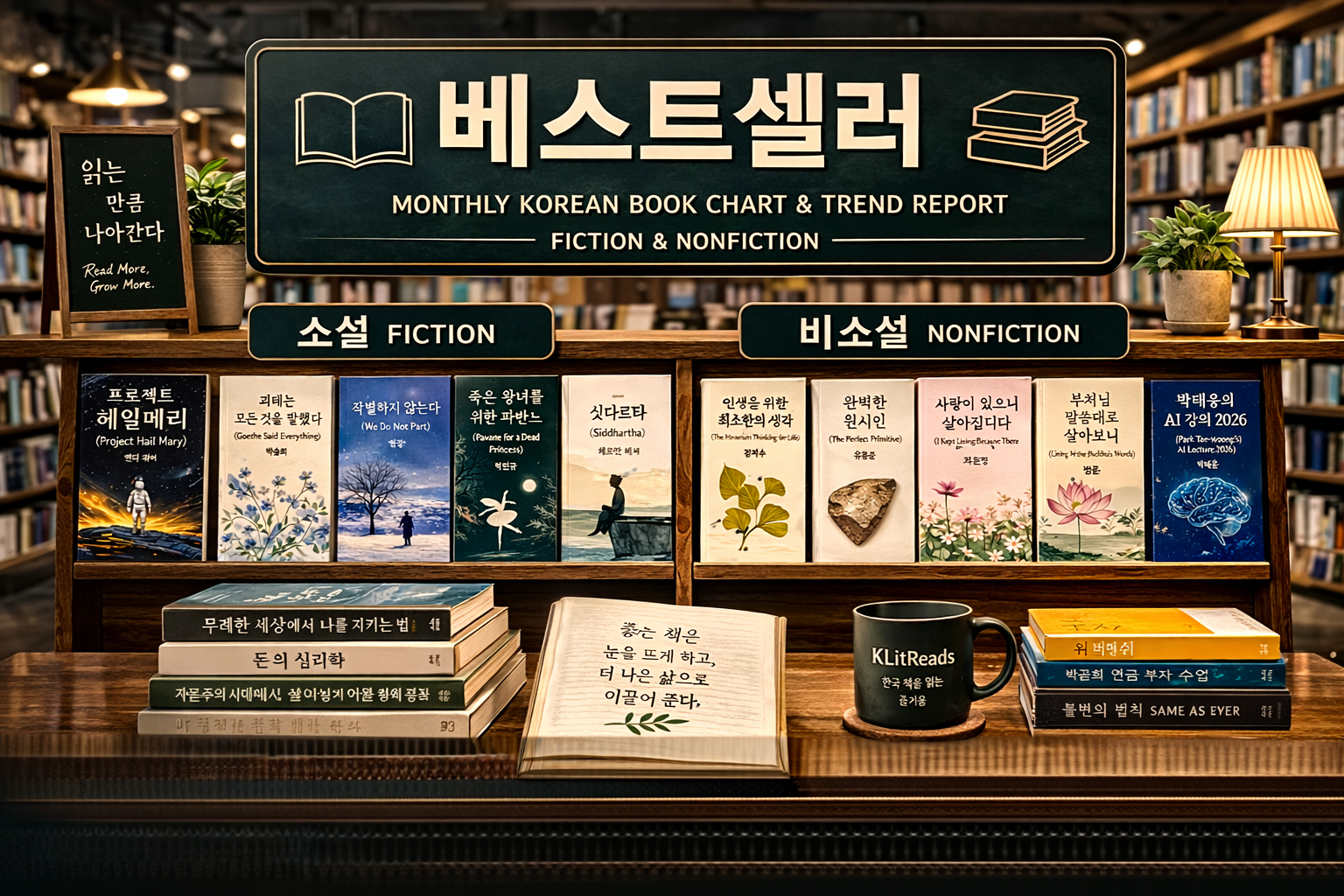
The built environment matters here. Korea’s major bookstores are no longer plain retail spaces. VisitKorea’s listing for Kyobo Book Centre Gwanghwamun describes a space that includes stationery, digital devices, accessories, exhibitions, and cafés. Recent reporting in Korea JoongAng Daily makes a similar point, saying large bookstores in Korea have evolved into “multifaceted spaces” and become common meetup spots among young people. In other words, the bookstore date is not happening in a traditional bookstore at all. It is happening in a hybrid venue that mixes browsing, shopping, waiting, resting, and being seen.
That hybrid quality helps explain why bookstores now compete with cafés as date locations. Official Starfield material describes its Suwon library as a cultural space organized around “rest,” “meeting,” and books, open for anyone to use. VisitKorea’s 2025 “text hip” feature goes even further, presenting book spots as “spaces offering more than reading” and pitching Starfield Library as a landmark where visitors can capture “SNS-worthy” photos among 70,000 books. This is a crucial clue. The appeal of the bookstore date is not just quiet. It is quiet plus atmosphere, quiet plus curation, quiet plus visual identity. A couple can talk, drift apart for a moment, compare tastes, buy nothing, buy one book, or take a photo that signals a certain kind of cultured softness.
In that sense, the bookstore date reflects fatigue with louder, more consumption-driven dating scripts. The café date in Korea often comes with an unspoken tempo: order quickly, secure a table, talk continuously, and often move again once the space feels too crowded. Bookstores offer a different rhythm. Conversation can pause without becoming awkward because the shelves themselves do some of the social work. You can point, browse, recommend, disagree, laugh at a cover, or learn what the other person lingers over. The date feels active without feeling loud. That is part of the reason online commenters describe bookstore dates as better for mood and concentration. The trend is less about literary seriousness than about finding a softer form of togetherness.
Still, the “quiet alternative” story has limits. One reason cafés feel tiring is price, and that pressure has not disappeared from urban leisure culture. Yonhap reported in May 2025 that major coffee chains and instant coffee producers in Korea were raising prices again. Against that backdrop, bookstores can feel like a less transactional place to spend time. But the online criticism in this trend points to a contradiction: many bookstore dates are not actually free of consumption pressure. In smaller book cafés or indie spaces, visitors may still feel obliged to buy a drink, a book, or both. What looks like a low-pressure date can easily become another version of the same urban equation: lingering requires spending.
That is where the criticism about seating and etiquette comes in. Once bookstores become social spaces, they inherit the same conflicts as cafés, libraries, and study lounges. Who gets to sit? For how long? Must you buy something to stay? Is browsing enough, or are you occupying a scarce resource? And when a bookstore is also understood as a quiet refuge, even ordinary dating behavior can start to feel intrusive. Korea JoongAng Daily’s recent reporting on young Koreans trying to meet potential partners in bookstores captures that discomfort well: the backlash is not only about romance, but about people violating the emotional contract of the place. For some visitors, a bookstore is a public commons for calm attention. For others, it is an open lifestyle venue. The friction comes from those two meanings colliding.
There is also a deeper structural irony behind the trend. Bookstores may be fashionable again, but the sector remains fragile. The Korea Times reported that the number of bookstores nationwide fell from 3,589 in 2003 to 2,484 in 2023. That means the new visibility of bookstore culture does not automatically translate into security for the industry. A photogenic flagship store in Seoul or Suwon may benefit from date traffic, tourism, and social media circulation, while many smaller bookstores continue operating under much tougher conditions. So when people celebrate the bookstore date, they are also revealing the uneven geography of Korean cultural life: some bookstores have become destinations, while others are still struggling simply to survive.
What makes this trend interesting, then, is not that Korea’s young people suddenly became old-school romantics. It is that they are searching for a date format that feels intentional without being extravagant, aesthetic without being chaotic, and intimate without demanding constant performance. The bookstore offers all of that unusually well. It turns taste into conversation, silence into comfort, and browsing into a social activity. But the same qualities that make it attractive also make it contested. The more bookstores function as urban living rooms, the more arguments there will be over who they are for.
The bookstore date is popular because it answers a real need. It gives young people a place to slow down in public. It feels more thoughtful than a café, less scripted than dinner, and less noisy than most commercial leisure spaces. But whether the trend lasts will depend on whether visitors treat bookstores as more than backdrops. If the bookstore date becomes only another photogenic routine, the backlash over spending, seats, and manners will grow. If it remains tied to curiosity, browsing, and respect for the space, it may become one of the more revealing lifestyle shifts in Korea right now: a small revolt against noise, speed, and overconsumption, staged quietly between the shelves.


Leave a Reply